
Leviathan Wakes
James S.A. Corey, 2011
Science fiction FantasyContemporary fiction
A detective hunts a missing woman across a solar system sliding toward war, while a freight crew stumbles onto something it should not have.
Feels like awe and unease. About society and morality.
A page from the book
The invention that opened the solar system also launched its inventor into nowhere.
A hundred and fifty years before, when the parochial disagreements between Earth and Mars had been on the verge of war, the Belt had been a far horizon of tremendous mineral wealth beyond viable economic reach, and the outer planets had been beyond even the most unrealistic corporate dream. Then Solomon Epstein had built his little modified fusion drive, popped it on the back of his three-man yacht, and turned it on. With a good scope, you could still see his ship going at a marginal percentage of the speed of light, heading out into the big empty. The best, longest funeral in the history of mankind. Fortunately, he’d left the plans on his home computer. The Epstein Drive hadn’t given humanity the stars, but it had delivered the planets. James S.A. Corey.James S.A. Corey is the pen name of Daniel Abraham and Ty Franck; Franck first built the solar system as a tabletop role-playing setting.
Books that feel like this



Where to get it
Some of these links earn us a small commission, at no cost to you. It keeps BookFeed free.
Questions readers ask
- What is Leviathan Wakes like?
- Feels like awe and unease. About society and morality.
- What should I read after Leviathan Wakes?
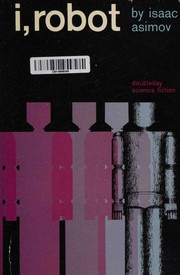
- If you liked Leviathan Wakes, try I, Robot (Isaac Asimov), Midnight in the Garden of Good and Evil (John Berendt) and One of Us Is Next (Karen M. McManus).
A taste of the feed
The strange comfort of learning that no one was ever in charge.
“But you are telling me, Susan, that the ‘Society for Humanity’ is right; and that Mankind has lost its own say in its future.” “It never had any, really. It was always at the mercy of economic and sociological forces it did not understand—at the whims of climate, and the fortunes of war. Now the Machines understand them; and no one can stop them, since the Machines will deal with them as they are dealing with the Society,—having, as they do, the greatest of weapons at their disposal, the absolute control of our economy.” “How horrible!” “Perhaps how wonderful! Think, that for all time, all conflicts are finally evitable. Only the Machines, from now on, are inevitable!”
I, Robot · Isaac Asimov
What a city gains by refusing to let the world in.
For me, Savannah’s resistance to change was its saving grace. The city looked inward, sealed off from the noises and distractions of the world at large. It grew inward, too, and in such a way that its people flourished like hothouse plants tended by an indulgent gardener. The ordinary became extraordinary. Eccentrics thrived. Every nuance and quirk of personality achieved greater brilliance in that lush enclosure than would have been possible anywhere else in the world.
Midnight in the Garden of Good and Evil · John Berendt
Sometimes the missing happens with the person still in the room.
That’s the worst way to miss somebody. When they’re right beside you and you miss them anyway.
I Am Number Four · Pittacus Lore
Read pages from books like this, one at a time
Keep reading in the feed