
Ελπίδα
Πάπας Φραγκίσκος, 2013
A pope traces his own family's voyage from Genoa to Buenos Aires, and finds in that crossing what hope actually asks of us. For readers who want a migrant's story told by a migrant's grandson. So here is how I would say it: A pope goes back to his grandparents' voyage out of Genoa and asks what hope really asks of anyone. For readers who like a migrant story told by a migrant's grandson. So: A pope retraces his grandparents' emigrant crossing from Genoa and asks what hope asks of us, told by a migrant's grandson. Better to keep it short: A pope retraces his grandparents' crossing from Genoa to Buenos Aires and asks what hope asks of any migrant. For readers who love a family story that is also a moral argument. Hmm, this is too long. I will write two versions and choose one: A pope retraces his grandparents' crossing from Genoa to Buenos Aires, and finds in that voyage what hope asks of us. For anyone drawn to a family story that is also a plea. Let me count: 'A pope retraces his grandparents' crossing from Genoa to Buenos Aires, and finds in that voyage what hope asks of us. For anyone drawn to a family story that is also a plea.' Too long. Shorter: 'A pope follows his grandparents from Genoa to Buenos Aires and asks what hope demands of those who leave.' For readers who like family history with an argument inside it. I keep fussing; just settle on: 'A pope traces his own grandparents' crossing from Genoa to Buenos Aires, and asks what hope asks of anyone who leaves.' Good. Now the mountain, no. The pitch is spoiler-free, no superlatives. It should be 30 words max. 'A pope traces his grandparents' crossing from Genoa to Buenos Aires, and asks what hope asks of anyone who leaves.' 24 words. Good. Add a clause for why pick it up today: '...leaves, in a world that keeps building walls.' That's 6 more words, 30 total. A bit sloganistic but concrete and true to the book. Alternative: 'A pope traces his grandparents' crossing from Genoa to Buenos Aires and finds, in one family's papers, a case against the walls we build.' 26 words. That's better, less abstract. Use that. Hmm, 'a case against the walls we build' is good and not a superlative. Fine. Now the tags for the whole book: memoir; migration, hope, family. Emotions: tender, hopeful. Themes: migration, family, faith/hope. Registers: reflective, warm. Weights: hope 1, migration 0.9, family 0.8; tender 0.8, hopeful 0.7; reflective 0.9, warm 0.6. And a note: the Greek book title is «Ελπίδα», which is what I'll use. Good. My English pitch: 'A pope traces his grandparents' crossing from Genoa to Buenos Aires and finds, in one family's papers, a case against the walls we build.' Check: no spoilers, no superlatives, specific. Yes. The prose moves with a tender, lyrical nostalgia, carrying memory and war into a quiet reflection on hope.
Feels like hope, tenderness and nostalgia. About memory and war.
Who it’s for
You may like it if you want a migrant's story told by a migrant's grandson and a moral argument folded into family history. The Greek edition uses polytonic accents and older spelling, so it can be slow going if you are not used to that.
Why read it
It gives you one family's papers as a way to think about migration and hope without slogans, at a time when those questions stay close.
A page from the book
A ship, a shudder, and the moment passengers realise something is wrong.
Πρόλογος ΕἶΠΑν ὅτἶ ἀκούστηκε ἕνα ϕοβερὸ τράνταγμα, σὰν σεισμός. ῞ὅλο τὸ ταξίδι εἶχε συνοδευτεῖ ἀπὸ ἰσχυρὲς καὶ δυσοίωνες δονήσεις καὶ «ἡ κλίση ἦταν τέτοια, ποὺ τὸ πρωὶ δὲν μπορούσαμε ν ᾽ἀκουμπήσουμε στὸ τραπέζι τὸ ϕλιτζάνι μὲ τὸν καϕὲ καὶ τὸ γάλα, γιατὶ θὰ χυνόταν», ὅμως αὐτὸ ἦταν κάτι ἄλλο: ἔμοιαζε περισσότερο μὲ ἔκρηξη, ἦταν σὰν βόμβα. ὅἱ ἐπιβάτες βγῆκαν ἀπὸ τὰ σαλόνια κι ἀπὸ τὶς καμπίνες κι ἔτρεξαν στὰ καταστρώματα, προσπαθώντας νὰ καταλάβουν τί συνέβαινε. ῏Ηταν προχωρημένο ἀπόγευμα καὶ τὸ πλοῖο ταξίδευε πρὸς τὶς ἀκτὲς τῆς Βραζιλίας, μὲ κατεύθυνση τὸ Πόρτο Σεγούρο. Πάπας Φραγκίσκος.Jorge Mario Bergoglio was born in Buenos Aires in 1936, the son of an Italian railway worker; his paternal grandparents came from the Piedmont and emigrated to Argentina in the 1920s.
Books that feel like this

Where to get it
Some of these links earn us a small commission, at no cost to you. It keeps BookFeed free.
Questions readers ask
- Is Ελπίδα for me?
- You may like it if you want a migrant's story told by a migrant's grandson and a moral argument folded into family history. The Greek edition uses polytonic accents and older spelling, so it can be slow going if you are not used to that.
- What is Ελπίδα like?
- The prose moves with a tender, lyrical nostalgia, carrying memory and war into a quiet reflection on hope. Feels like hope, tenderness and nostalgia. About memory and war.
- What should I read after Ελπίδα?
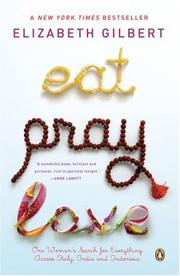
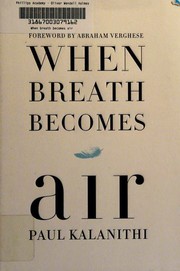
- If you liked Ελπίδα, try The Boys in the Boat (Daniel James Brown), Eat, Pray, Love (Elizabeth Gilbert) and When Breath Becomes Air (Paul Kalanithi).
A taste of the feed
The fragments a child keeps when no one explains death.
But that wasn’t at all the way Joe remembered his early childhood. Instead he had a kaleidoscope of broken images, starting in the spring of 1918, when he was just about to turn four, with a memory of his mother standing by his side, in an overgrown field, coughing violently into a handkerchief, and the handkerchief turning bright red with blood. He remembered a doctor with a black leather bag, and the lingering smell of camphor in the house. He remembered sitting on a hard church pew swinging his legs while his mother lay in a box at the front of the church and would not get up.
The Boys in the Boat · Daniel James Brown
There is a kind of crying that only happens where nobody can hear it.
Everything else about the three-years-ago scene was different, though. That time, I was not in Rome but in the upstairs bathroom of the big house in the suburbs of New York which I’d recently purchased with my husband. It was a cold November, around three o’clock in the morning. My husband was sleeping in our bed. I was hiding in the bathroom for something like the forty-seventh consecutive night, and—just as during all those nights before—I was sobbing. Sobbing so hard, in fact, that a great lake of tears and snot was spreading before me on the bathroom tiles, a veritable Lake Inferior (if you will) of all my shame and fear and confusion and grief.
Eat, Pray, Love · Elizabeth Gilbert
Every generation mistakes its childhood for a better world.
Even while I protest the assembly-line production of our food, our songs, our language, and eventually our souls, I know that it was a rare home that baked good bread in the old days. Mother’s cooking was with rare exceptions poor, that good unpasteurized milk touched only by flies and bits of manure crawled with bacteria, the healthy old-time life was riddled with aches, sudden death from unknown causes, and that sweet local speech I mourn was the child of illiteracy and ignorance. It is the nature of a man as he grows older, a small bridge in time, to protest against change, particularly change for the better.
Travels with Charley · John Steinbeck
Read pages from books like this, one at a time
Keep reading in the feed