
Don Quixote
Miguel de Cervantes Saavedra (1547–1616), 1605
★ 3.92 from 317.2k ratings on Goodreads
A minor Spanish gentleman reads too many chivalric romances, rides out as a knight, and takes a practical farmer along as his squire. A plain, wondering voice follows two mismatched companions through a world where identity keeps shifting, with friendship at the center.
Feels like wonder. About identity and friendship.
Who it’s for
You may like it if you enjoy old comic adventures, talkative characters, and stories that question what a hero is. Be ready for seventeenth-century prose and a long, digressive journey that can slow down in stretches.
Why read it
It gives you comedy and pathos in equal measure, and a companionable look at how stories shape the people who read them.
Pages from the book
Every generation invents a past in which no one had to lock the door.
Then the love-thoughts of the heart clothed themselves simply and naturally as the heart conceived them, nor sought to commend themselves by forced and rambling verbiage. Fraud, deceit, or malice had then not yet mingled with truth and sincerity. Justice held her ground, undisturbed and unassailed by the efforts of favour and of interest, that now so much impair, pervert, and beset her. Arbitrary law had not yet established itself in the mind of the judge, for then there was no cause to judge and no one to be judged. Maidens and modesty, as I have said, wandered at will alone and unattended, without fear of insult from lawlessness or libertine assault, and if they were undone it was of their own will and pleasure. The coldest weather is the kind a soldier argues with his own breath.
Continuing his discourse Don Quixote said: “As we began in the student’s case with poverty and its accompaniments, let us see now if the soldier is richer, and we shall find that in poverty itself there is no one poorer; for he is dependent on his miserable pay, which comes late or never, or else on what he can plunder, seriously imperilling his life and conscience; and sometimes his nakedness will be so great that a slashed doublet serves him for uniform and shirt, and in the depth of winter he has to defend himself against the inclemency of the weather in the open field with nothing better than the breath of his mouth, which I need not say, coming from an empty place, must come out cold, contrary to the laws of nature. Two feet of plank between a soldier and the sea.
And if this seems a trifling risk, let us see whether it is equalled or surpassed by the encounter of two galleys stem to stem, in the midst of the open sea, locked and entangled one with the other, when the soldier has no more standing room than two feet of the plank of the spur; and yet, though he sees before him threatening him as many ministers of death as there are cannon of the foe pointed at him, not a lance length from his body, and sees too that with the first heedless step he will go down to visit the profundities of Neptune’s bosom, still with dauntless heart, urged on by honour that nerves him, he makes himself a target for all that musketry, and struggles to cross that narrow path to the enemy’s ship. Miguel de Cervantes Saavedra.Cervantes lost the use of his left hand at the Battle of Lepanto and was later held captive in Algiers for five years.
Books that feel like this

Where to get it
Some of these links earn us a small commission, at no cost to you. It keeps BookFeed free.
Questions readers ask
- Is Don Quixote for me?
- You may like it if you enjoy old comic adventures, talkative characters, and stories that question what a hero is. Be ready for seventeenth-century prose and a long, digressive journey that can slow down in stretches.
- What is Don Quixote like?
- A plain, wondering voice follows two mismatched companions through a world where identity keeps shifting, with friendship at the center. Feels like wonder. About identity and friendship.
- What should I read after Don Quixote?
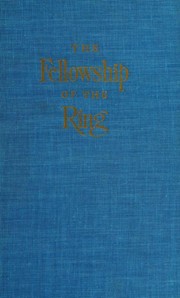
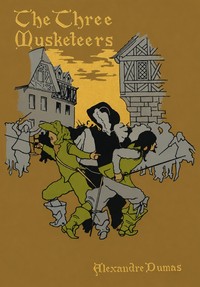
- If you liked Don Quixote, try Les Misérables (Victor Hugo), The Fellowship of the Ring (J.R.R. Tolkien) and The Three Musketeers (Alexandre Dumas).
A taste of the feed
The bravest lives are often the ones nobody applauds.
For many great deeds are performed in petty combats. There are instances of bravery ignored and obstinate, which defend themselves step by step in that fatal onslaught of necessities and turpitudes. Noble and mysterious triumphs which no eye beholds, which are requited with no renown, which are saluted with no trumpet blast. Life, misfortune, isolation, abandonment, poverty, are the fields of battle which have their heroes; obscure heroes, who are, sometimes, grander than the heroes who win renown.
Les Misérables · Victor Hugo
What to do when the times arrive uninvited.
‘I wish it need not have happened in my time,’ said Frodo. ‘So do I,’ said Gandalf, ‘and so do all who live to see such times. But that is not for them to decide. All we have to decide is what to do with the time that is given us. ‘What a pity that Bilbo did not stab that vile creature, when he had a chance!’ ‘Pity? It was Pity that stayed his hand. Pity, and Mercy: not to strike without need. And he has been well rewarded, Frodo. Be sure that he took so little hurt from the evil, and escaped in the end, because he began his ownership of the Ring so. With Pity.’
The Fellowship of the Ring · J.R.R. Tolkien
The particular agony of walking into a room where everyone already knows each other.
It was, then, into the midst of this tumult and disorder that our young man advanced with a beating heart, ranging his long rapier up his lanky leg, and keeping one hand on the edge of his cap, with that half-smile of the embarrassed provincial who wishes to put on a good face. When he had passed one group he began to breathe more freely; but he could not help observing that they turned round to look at him, and for the first time in his life d’Artagnan, who had till that day entertained a very good opinion of himself, felt ridiculous.
The Three Musketeers · Alexandre Dumas
Read pages from books like this, one at a time
Keep reading in the feed