BookFeed Ελληνικά

Books like Το δεύτερο φύλο

If Το δεύτερο φύλο stayed with you, these share its feel: identity, freedom and society. Each comes with a real page, so you can tell in a minute.

About Το δεύτερο φύλο · Simone de Beauvoir

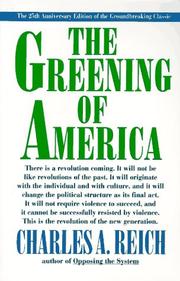
  1. 1.The Greening of America

    Charles A. Reich, 1970

    Also freedom and society. A Yale law professor argues that the counterculture's change of consciousness, not politics, is the real revolution remaking America.

    There is a revolution coming. It will not be like revolutions of the past. It will originate with the individual and with culture, and it will change the political structure only as its final act. It will not require violence to succeed, and it cannot be successfully resisted by violence. It is now spreading with amazing rapidity, and already our laws, institutions and social structure are changing in consequence. It promises a higher reason, a more human community, and a new and liberated individual. Its ultimate creation will be a new and enduring wholeness and beauty — a renewed relationship of man to himself, to other men, to society, to nature, and to the land.This is the revolution of the new generation.
    Excerpt from The Greening of America, Charles A. Reich 1970. Quoted for discovery. Source Rights & removals
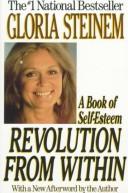
  2. 2.Revolution from Within

    Gloria Steinem, 1992

    Also freedom and society. A rigorous examination of how personal integrity informs the future of society and nations.

    I’ve learned from these events that self-esteem plays as much a part in the destiny of nations as it does in the lives of individuals; that self-hatred leads to the need either to dominate or to be dominated; that citizens who refuse to obey anything but their own conscience can transform their countries; in short, that self-esteem is the basis of any real democracy.
    Excerpt from Revolution from Within, Gloria Steinem 1992. Quoted for discovery. Source Rights & removals
  3. 3.Essays of Michel de Montaigne

    Michel de Montaigne, 1580

    Also curiosity and identity. A sixteenth-century nobleman examines friendship, death, custom and his own kidney stones, using himself as the evidence. It reads like a long, clever conversation with a frank friend.

    ‘Tis wonderful from how many idle beginnings and frivolous causes such famous impressions commonly, proceed. This it is that obstructs information; for whilst we seek out causes and solid and weighty ends, worthy of so great a name, we lose the true ones; they escape our sight by their littleness. And, in truth, a very prudent, diligent, and subtle inquisition is required in such searches, indifferent, and not prepossessed. To this very hour, all these miracles and strange events have concealed themselves from me: I have never seen greater monster or miracle in the world than myself: one grows familiar with all strange things by time and custom, but the more I frequent and the better I know myself, the more does my own deformity astonish me, the less I understand myself.
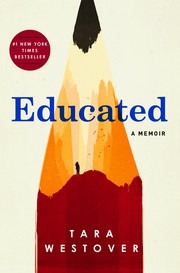
  4. 4.Educated

    Tara Westover, 2018

    Also identity and curiosity. A girl grows up without school or doctors on an Idaho mountain, then teaches herself enough to leave—and has to decide what leaving costs.

    You were my child. I should have protected you.I lived a lifetime in the moment I read those lines, a life that was not the one I had actually lived. I became a different person, who remembered a different childhood. I didn’t understand the magic of those words then, and I don’t understand it now. I know only this: that when my mother told me she had not been the mother to me that she wished she’d been, she became that mother for the first time.
    Excerpt from Educated, Tara Westover, Random House Trade Paperbacks 2018. Quoted for discovery. Source Rights & removals
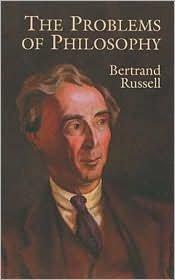
  5. 5.The Problems of Philosophy

    Bertrand Russell, 1912

    Also curiosity and freedom. A short, clear tour of the questions underneath everything: whether the table is really there, why the sun should rise tomorrow, what we can know. Written for readers with no philosophy background.

    Everything, in contemplation, that is personal or private, everything that depends upon habit, self-interest, or desire, distorts the object, and hence impairs the union which the intellect seeks. By thus making a barrier between subject and object, such personal and private things become a prison to the intellect. The free intellect will see as God might see, without a here and now, without hopes and fears, without the trammels of customary beliefs and traditional prejudices, calmly, dispassionately, in the sole and exclusive desire of knowledge—knowledge as impersonal, as purely contemplative, as it is possible for man to attain.
  6. 6.The Fire Next Time

    James Baldwin, 1963

    Also freedom and unease. Baldwin's 1963 essays — a letter to his teenage nephew and a long reckoning with race, faith and American self-deception — still sound like an alarm nobody has switched off.

    Perhaps the whole root of our trouble, the human trouble, is that we will sacrifice all the beauty of our lives, will imprison ourselves in totems, taboos, crosses, blood sacrifices, steeples, mosques, races, armies, flags, nations, in order to deny the fact of death, which is the only fact we have.
    Excerpt from The Fire Next Time, James Baldwin, Vintage 1963. Quoted for discovery. Source Rights & removals

Read pages from books like this, one at a time

BookFeed is a feed of real passages from real books. It learns what moves you and finds your next book.

Open BookFeed

Free, no sign-up.