BookFeed Ελληνικά

Books like Flowers for Algernon

If Flowers for Algernon stayed with you, these share its feel: identity, melancholy and morality. Each comes with a real page, so you can tell in a minute.

About Flowers for Algernon · Daniel Keyes

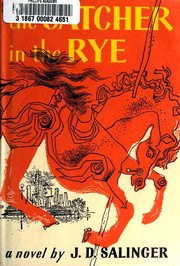
  1. 1.The Catcher in the Rye

    J. D. Salinger, 1951

    Also identity and melancholy. A prep-school dropout drifts through New York for a few days, allergic to phonies and desperate to protect someone younger.

    Anyway, I keep picturing all these little kids playing some game in this big field of rye and all. Thousands of little kids, and nobody’s around — nobody big, I mean — except me. And I’m standing on the edge of some crazy cliff. What I have to do, I have to catch everybody if they start to go over the cliff — I mean if they’re running and they don’t look where they’re going I have to come out from somewhere and catch them. That’s all I’d do all day. I’d just be the catcher in the rye, and all. I know it’s crazy, but that’s the only thing I’d really like to be. I know it’s crazy.
    Excerpt from The Catcher in the Rye, J. D. Salinger 1951. Quoted for discovery. Source Rights & removals
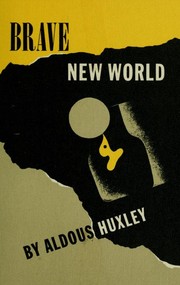
  2. 2.Brave New World

    Aldous Huxley, 1932

    Also society and curiosity. An engineered future where comfort is compulsory and happiness is manufactured—and one outsider asks what was sacrificed to get it.

    Impulse arrested spills over, and the flood is feeling, the flood is passion, the flood is even madness: it depends on the force of the current, the height and strength of the barrier. The unchecked stream flows smoothly down its appointed channels into a calm well-being. (The embryo is hungry; day in, day out, the blood-surrogate pump unceasingly turns its eight hundred revolutions a minute. The decanted infant howls; at once a nurse appears with a bottle of external secretion. Feeling lurks in that interval of time between desire and its consummation. Shorten that interval, break down all those old unnecessary barriers.
    Excerpt from Brave New World, Aldous Huxley, HarperPerennial 1932. Quoted for discovery. Source Rights & removals
  3. 3.Frankenstein

    Mary Shelley, 1818

    Also morality and grief. A young scientist makes life and then cannot face what he has made. Told in nested voices, it asks who owes what to whom, and why ambition so often ends in solitude.

    “But where were my friends and relations? No father had watched my infant days, no mother had blessed me with smiles and caresses; or if they had, all my past life was now a blot, a blind vacancy in which I distinguished nothing. From my earliest remembrance I had been as I then was in height and proportion. I had never yet seen a being resembling me or who claimed any intercourse with me. What was I? The question again recurred, to be answered only with groans.
  4. 4.Stranger in a Strange Land

    Robert A. Heinlein, 1956

    Also identity and curiosity. A man from Mars returns to Earth, encountering a planet utterly obsessed with customs, social rules, and abstract belief.

    Jill put a hand to her mouth and screamed.Smith’s face had been completely blank. Now it became tragically forlorn as he realized that he must have chosen wrong action at the cusp. He looked imploringly at Jill and began to tremble. His eyes rolled up; he slipped slowly down to the grass, pulled himself tightly into a foetal ball and was motionless.
    Excerpt from Stranger in a Strange Land, Robert A. Heinlein, Ace 1956. Quoted for discovery. Source Rights & removals
  5. 5.Of Mice and Men

    John Steinbeck, 1937

    Also grief and melancholy. Two migrant workers drift through Depression-era California, trading a shared dream of a small farm against the cost of staying together.

    They come, an’ they quit an’ go on; an’ every damn one of ‘em’s got a little piece of land in his head. An’ never a God damn one of ‘em ever gets it. Just like heaven. Ever’body wants a little piece of lan’. I read plenty of books out here. Nobody never gets to heaven, and nobody gets no land. It’s just in their head.
    Excerpt from Of Mice and Men, John Steinbeck, Vicens Vives 1937. Quoted for discovery. Source Rights & removals
  6. 6.Middlemarch

    George Eliot, 1872

    Also morality and identity. A provincial town, a clever woman married to the wrong scholar, an ambitious doctor, and the slow, comic, devastating work of learning that other people are real.

    We are all of us born in moral stupidity, taking the world as an udder to feed our supreme selves: Dorothea had early begun to emerge from that stupidity, but yet it had been easier to her to imagine how she would devote herself to Mr. Casaubon, and become wise and strong in his strength and wisdom, than to conceive with that distinctness which is no longer reflection but feeling—an idea wrought back to the directness of sense, like the solidity of objects—that he had an equivalent centre of self, whence the lights and shadows must always fall with a certain difference.
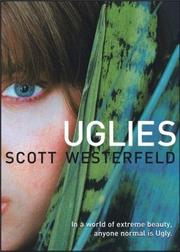
  7. 11.Uglies

    Scott Westerfeld, 2005

    Also identity and society. A future city gives everyone beauty surgery at sixteen—and Tally starts asking what gets removed along with the flaws.

Read pages from books like this, one at a time

BookFeed is a feed of real passages from real books. It learns what moves you and finds your next book.

Open BookFeed

Free, no sign-up.