
The Hitchhiker's Guide to the Galaxy
Douglas Adams, 1979
Science fiction Graphic novels & humourFantasyContemporary fiction
The Earth is demolished for a bypass, and a man in his dressing gown must hitch across a galaxy run on bad bureaucracy and good towels. The mood is dry, absurd and brisk, with a wandering voice that keeps finding jokes in bureaucracy, infinity and ordinary panic.
Feels like wonder and nostalgia. About time and memory.
Who it’s for
You may like it if you enjoy dry, absurd satire, cosmic wandering and jokes tucked into digressions. Its humour is very British and rooted in late-1970s radio comedy, so some references and sideways logic may feel dated or oblique.
Why read it
For a comic reset: it turns cosmic scale into bad bureaucracy and good jokes, and makes insignificance feel oddly companionable.
A page from the book
What it actually costs to see yourself at true scale.
“Have some sense of proportion!” she would say, sometimes as often as thirty-eight times in a single day.And so he built the Total Perspective Vortex—just to show her.And into one end he plugged the whole of reality as extrapolated from a piece of fairy cake, and into the other end he plugged his wife: so that when he turned it on she saw in one instant the whole infinity of creation and herself in relation to it.To Trin Tragula’s horror, the shock completely annihilated her brain; but to his satisfaction he realized that he had proved conclusively that if life is going to exist in a Universe of this size, then the one thing it cannot afford to have is a sense of proportion. Douglas Adams.Hitchhiker's began as a 1978 BBC Radio 4 series; Adams was also the youngest script editor Doctor Who ever had.
Books that feel like this
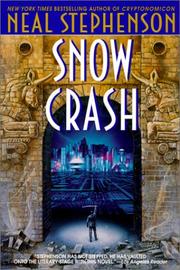
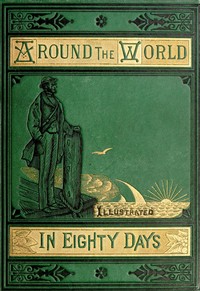
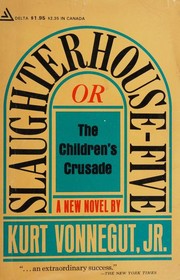
More by Douglas Adams
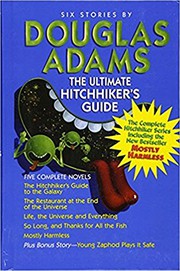
The Ultimate Hitchhiker’s Guide to the Galaxy
Douglas Adams, 1979
A hapless Englishman is swept off a doomed planet by an alien researcher, armed only with a towel and a very unreliable guide.
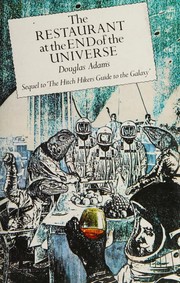
The Restaurant at the End of the Universe
Douglas Adams, 1980
The universe is ending, the food is excellent, and the only sane response is a joke — Adams's second Hitchhiker's novel.
Where to get it
Some of these links earn us a small commission, at no cost to you. It keeps BookFeed free.
Questions readers ask
- Is The Hitchhiker's Guide to the Galaxy for me?
- You may like it if you enjoy dry, absurd satire, cosmic wandering and jokes tucked into digressions. Its humour is very British and rooted in late-1970s radio comedy, so some references and sideways logic may feel dated or oblique.
- What is The Hitchhiker's Guide to the Galaxy like?
- The mood is dry, absurd and brisk, with a wandering voice that keeps finding jokes in bureaucracy, infinity and ordinary panic. Feels like wonder and nostalgia. About time and memory.
- What should I read after The Hitchhiker's Guide to the Galaxy?
- If you liked The Hitchhiker's Guide to the Galaxy, try Good Omens (Terry Pratchett), Snow Crash (Neal Stephenson) and Around the World in Eighty Days (Jules Verne).
A taste of the feed
A demon's professional failing is liking the people he's meant to ruin.
He rather liked people. It was a major failing in a demon. Oh, he did his best to make their short lives miserable, because that was his job, but nothing he could think up was half as bad as the stuff they thought up themselves. They seemed to have a talent for it. It was built into the design, somehow. They were born into a world that was against them in a thousand little ways, and then devoted most of their energies to making it worse.
Good Omens · Terry Pratchett
What a storm looks like to the one person aboard not frightened of it.
Phileas Fogg, with body erect and legs wide apart, standing like a sailor, gazed without staggering at the swelling waters. The young woman, who was seated aft, was profoundly affected as she looked out upon the ocean, darkening now with the twilight, on which she had ventured in so frail a vessel. Above her head rustled the white sails, which seemed like great white wings. The boat, carried forward by the wind, seemed to be flying in the air.
Around the World in Eighty Days · Jules Verne
What if war is a glacier, and no book has ever moved one?
“You know what I say to people when I hear they’re writing anti-war books?” “No. What do you say, Harrison Starr?” “I say, ‘Why don’t you write an anti-glacier book instead?’” What he meant, of course, was that there would always be wars, that they were as easy to stop as glaciers. I believe that too. And even if wars didn’t keep coming like glaciers, there would still be plain old death.
Slaughterhouse-Five · Kurt Vonnegut
Read pages from books like this, one at a time
Keep reading in the feed