
Ανάλυση, τόμ. 1
Jon Rogawski, 2007
A calculus textbook, not a literary one: its best pages are small, self-contained curiosities about numbers, notation and the people who fixed them. A steady, curious read: definitions and worked examples move at textbook pace, with brief historical asides that feel almost lyrical.
Feels like curiosity. About ambition.
Who it’s for
You may like it if you want a calculus text that pauses on notation, number history, and the people behind familiar symbols. Be ready for a long, formal volume: the main text is dense with definitions and exercises, and the historical curiosities are brief side notes.
Why read it
It gives you the machinery of calculus alongside small stories about why symbols look the way they do, which can make the formal parts easier to remember.
A page from the book
Every graph you’ve ever drawn still carries one man’s handwriting.
Ο όρος «καρτεσιανό» αναφέρεται στον Γάλλο φιλόσοφο και μαθηματικό René Descartes (1596-1650) του οποίου το λατινικό όνομα ήταν Cartesius. Toυ πιστώνεται (μαζί με τον Pierre de Fermat) η ανακάλυψη της αναλυτικής γεωμετρίας. Στο σπουδαίο του έργο La Géométrie ο Descartes χρησιμοποίησε τα γράμματα x, y, z για αγνώστους και a, b, c για σταθερές, μια σύμβαση που ακολουθείται έως σήμερα. Jon Rogawski.Jon Rogawski taught mathematics at UCLA; his calculus textbook became one of the most widely assigned in American universities, and this Greek edition is a translation of it.
Books that feel like this




Where to get it
Some of these links earn us a small commission, at no cost to you. It keeps BookFeed free.
Questions readers ask
- Is Ανάλυση, τόμ. 1 for me?
- You may like it if you want a calculus text that pauses on notation, number history, and the people behind familiar symbols. Be ready for a long, formal volume: the main text is dense with definitions and exercises, and the historical curiosities are brief side notes.
- What is Ανάλυση, τόμ. 1 like?
- A steady, curious read: definitions and worked examples move at textbook pace, with brief historical asides that feel almost lyrical. Feels like curiosity. About ambition.
- What should I read after Ανάλυση, τόμ. 1?
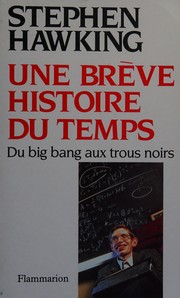
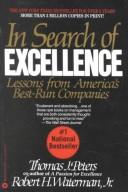
- If you liked Ανάλυση, τόμ. 1, try A Brief History of Time (Stephen W. Hawking), In Search of Excellence (Thomas J. Peters) and Autobiography of Benjamin Franklin (Benjamin Franklin).
A taste of the feed
The question a physicist can ask but equations cannot answer.
Even if there is only one possible unified theory, it is just a set of rules and equations. What is it that breathes fire into the equations and makes a universe for them to describe? The usual approach of science of constructing a mathematical model cannot answer the questions of why there should be a universe for the model to describe. Why does the universe go to all the bother of existing?
A Brief History of Time · Stephen W. Hawking
Can a company be excellent without knowing what it stands for?
Every excellent company we studied is clear on what it stands for, and takes the process of value shaping seriously. In fact, we wonder whether it is possible to be an excellent company without clarity on values and without having the right sorts of values.
In Search of Excellence · Thomas J. Peters
The trouble with trying to be humble.
In reality, there is, perhaps, no one of our natural passions so hard to subdue as pride. Disguise it, struggle with it, beat it down, stifle it, mortify it as much as one pleases, it is still alive, and will every now and then peep out and show itself; you will see it, perhaps, often in this history; for, even if I could conceive that I had compleatly overcome it, I should probably be proud of my humility.
Autobiography of Benjamin Franklin · Benjamin Franklin
Read pages from books like this, one at a time
Keep reading in the feed