BookFeed Ελληνικά

Books like The Prince

If The Prince stayed with you, these share its feel: power, curiosity and unease. Each comes with a real page, so you can tell in a minute.

About The Prince · Niccolò Machiavelli

  1. 1.The Essays or Counsels, Civil and Moral

    Francis Bacon, 1597

    Also curiosity and morality. Short, dense essays on revenge, friendship, wealth, ambition and fear, written like a clever advisor's notes. Each page packs a lifetime of worldly observation into a few sharp sentences.

    For as for the first wrong, it doth but offend the law; but the revenge of that wrong, putteth the law out of office. Certainly, in taking revenge, a man is but even with his enemy; but in passing it over, he is superior; for it is a prince’s part to pardon. And Solomon, I am sure, saith, It is the glory of a man, to pass by an offence. That which is past is gone, and irrevocable; and wise men have enough to do, with things present and to come; therefore they do but trifle with themselves, that labor in past matters. There is no man doth a wrong, for the wrong’s sake; but thereby to purchase himself profit, or pleasure, or honor, or the like. Therefore why should I be angry with a man, for loving himself better than me?
  2. 2.Beyond Good and Evil

    Friedrich Nietzsche, 1886

    Also curiosity and morality. A sharp-tongued tour of the habits of mind we take for granted: why philosophers lie to themselves, what our morals hide, and what it takes to think without flattering yourself.

    Nobody will very readily regard a doctrine as true merely because it makes people happy or virtuous—excepting, perhaps, the amiable “Idealists,” who are enthusiastic about the good, true, and beautiful, and let all kinds of motley, coarse, and good-natured desirabilities swim about promiscuously in their pond. Happiness and virtue are no arguments. It is willingly forgotten, however, even on the part of thoughtful minds, that to make unhappy and to make bad are just as little counter-arguments. A thing could be TRUE, although it were in the highest degree injurious and dangerous; indeed, the fundamental constitution of existence might be such that one succumbed by a full knowledge of it—so that the strength of a mind might be measured by the amount of “truth” it could endure—or to speak more plainly, by the extent to which it REQUIRED truth attenuated, veiled, sweetened, damped, and falsified.
  3. 3.Sapiens

    Yuval Noah Harari, 2011

    Also curiosity and power. A historian retells the whole human story as one argument: that we conquered the world by learning to believe in things that aren't there.

    One of history’s few iron laws is that luxuries tend to become necessities and to spawn new obligations. Once people get used to a certain luxury, they take it for granted. Then they begin to count on it. Finally, they reach a point where they can’t live without it.
    Excerpt from Sapiens, Yuval Noah Harari 2011. Quoted for discovery. Source Rights & removals
  4. 4.Dialogues

    Plato, -347

    Also morality and curiosity. A deep dive into the questions that define civilization: what is justice, what is wisdom, and what happens to the soul after death.

    Book VII. And now I will describe in a figure the enlightenment or unenlightenment of our nature:—Imagine human beings living in an underground den which is open towards the light; they have been there from childhood, having their necks and legs chained, and can only see into the den. At a distance there is a fire, and between the fire and the prisoners a raised way, and a low wall is built along the way, like the screen over which marionette players show their puppets. Behind the wall appear moving figures, who hold in their hands various works of art, and among them images of men and animals, wood and stone, and some of the passersby are talking and others silent. “A strange parable,” he said, “and strange captives.”
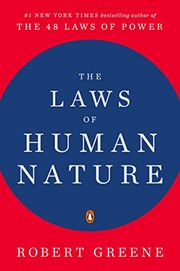
  5. 5.The Laws of Human Nature

    Robert Greene, 2018

    Also curiosity and power. A manual on power and self-knowledge that reads history's operators—Pericles, con artists, leaders—to show why we act against our own interests.

    “I could give you many other reasons,” he concluded, “why you should feel confident in ultimate victory, if only you will make up your minds not to add to the empire while the war is in progress, and not to go out of your way to involve yourselves in new perils. What I fear is not the enemy’s strategy but our own mistakes.” The novelty of what he was proposing aroused great debate. Neither hawks nor doves were satisfied with his plan, but in the end, his reputation for wisdom carried the day and his strategy was approved. Several months later the fateful war began.
    Excerpt from The Laws of Human Nature, Robert Greene, Penguin Books 2018. Quoted for discovery. Source Rights & removals
  6. 6.Decision Points

    George W. Bush, 2010

    Also power and curiosity. An unflinching look at the highest levels of power, grappling with financial collapse, foreign wars, and the relentless weight of public expectation.

    I was furious the situation had reached this point. A relatively small group of people—many on Wall Street, some not—had gambled that the housing market would keep booming forever. It didn’t. In a normal environment, the free market would render its judgment and they could fail.
    Excerpt from Decision Points, George W. Bush, Crown 2010. Quoted for discovery. Source Rights & removals
  7. 7.Analects

    Confucius

    Also morality and power. A collection of small, sharp conversations on how to live with other people, mostly remembered because they refuse to be simple rules.

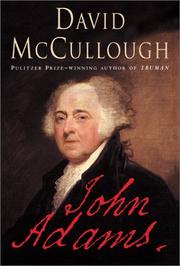
  8. 10.John Adams

    David McCullough, 2001

    Also curiosity and morality. The life of a prickly, eloquent founder, told through the letters he and Abigail exchanged while they helped invent a country.

Read pages from books like this, one at a time

BookFeed is a feed of real passages from real books. It learns what moves you and finds your next book.

Open BookFeed

Free, no sign-up.