BookFeed

Books like Nineteen Eighty-Four

If Nineteen Eighty-Four stayed with you, these share its feel: dread, power and freedom. Each comes with a real page, so you can tell in a minute.

About Nineteen Eighty-Four · George Orwell

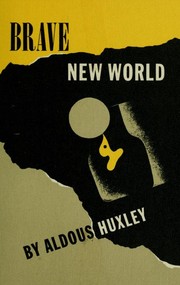
  1. 1.Brave New World

    Aldous Huxley, 1932

    Also unease and power. An engineered future where comfort is compulsory and happiness is manufactured—and one outsider asks what was sacrificed to get it.

    Impulse arrested spills over, and the flood is feeling, the flood is passion, the flood is even madness: it depends on the force of the current, the height and strength of the barrier. The unchecked stream flows smoothly down its appointed channels into a calm well-being. (The embryo is hungry; day in, day out, the blood-surrogate pump unceasingly turns its eight hundred revolutions a minute. The decanted infant howls; at once a nurse appears with a bottle of external secretion. Feeling lurks in that interval of time between desire and its consummation. Shorten that interval, break down all those old unnecessary barriers.
    Excerpt from Brave New World, Aldous Huxley, HarperPerennial 1932. Quoted for discovery. Source Rights & removals
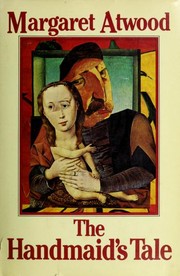
  2. 2.The Handmaid's Tale

    Margaret Atwood, 1985

    Also dread and power. A woman survives in a theocratic state where her body is a resource; her wry, precise voice reports the daily cost of obedience.

    He was not a monster, to her. Probably he had some endearing trait: he whistled, off key, in the shower, he had a yen for truffles, he called his dog Liebchen and made it sit up for little pieces of raw steak. How easy it is to invent a humanity, for anyone at all.
    Excerpt from The Handmaid's Tale, Margaret Atwood, Random House 1985. Quoted for discovery. Source Rights & removals
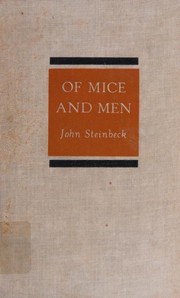
  3. 3.Of Mice and Men

    John Steinbeck, 1937

    Also dread. Two migrant workers drift through Depression-era California, trading a shared dream of a small farm against the cost of staying together.

    They come, an’ they quit an’ go on; an’ every damn one of ‘em’s got a little piece of land in his head. An’ never a God damn one of ‘em ever gets it. Just like heaven. Ever’body wants a little piece of lan’. I read plenty of books out here. Nobody never gets to heaven, and nobody gets no land. It’s just in their head.
    Excerpt from Of Mice and Men, John Steinbeck, Vicens Vives 1937. Quoted for discovery. Source Rights & removals
  4. 4.Crime and Punishment

    Fyodor Dostoevsky, 1866

    Also power and dread. A broke student in St. Petersburg tests a theory that some people are above the law, and discovers the cost is not legal but psychological.

    And if only fate would have sent him repentance—burning repentance that would have torn his heart and robbed him of sleep, that repentance, the awful agony of which brings visions of hanging or drowning! Oh, he would have been glad of it! Tears and agonies would at least have been life. But he did not repent of his crime.
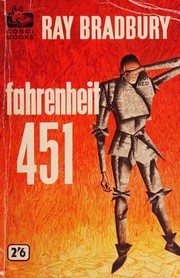
  5. 5.Fahrenheit 451

    Ray Bradbury, 1953

    Also freedom and memory. A fireman who burns books begins to read one, in a future where screens are family and speed is peace.

    Cram them full of non-combustible data, chock them so damned full of ‘facts’ they feel stuffed, but absolutely ‘brilliant’ with information. Then they’ll feel they’re thinking, they’ll get a sense of motion without moving. And they’ll be happy, because facts of that sort don’t change. Don’t give them any slippery stuff like philosophy or sociology to tie things up with. That way lies melancholy. Any man who can take a TV wall apart and put it back together again, and most men can nowadays, is happier than any man who tries to slide rule, measure, and equate the universe, which just won’t be measured or equated without making man feel bestial and lonely. I know, I’ve tried it; to hell with it."
    Excerpt from Fahrenheit 451, Ray Bradbury, Wheeler Pub Inc 1953. Quoted for discovery. Source Rights & removals
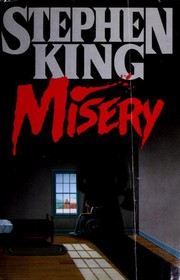
  6. 6.Misery

    Stephen King, 1987

    Also dread and unease. A novelist wakes from a crash in a stranger's house, nursed by his number-one fan — who has read his new book and wants him to take it back.

    The greater part of human pain is unnecessary. It is self created as long as the unobserved mind runs your life. The pain that you create now is always some form of non acceptance, some form of unconscious resistance to what is. On the level of thought, the resistance is some form of judgment. On the emotional level, it is some form of negativity. The intensity of the pain depends on the degree of resistance to the present moment, and this in turn depends on how strongly you are identified with your mind. The mind always seeks to deny the Now and to escape from it. In other words, the more you are identified with your mind, the more you suffer.
    Excerpt from Misery, Stephen King, National Geographic Books 1987. Quoted for discovery. Source Rights & removals
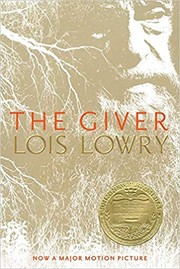
  7. 7.The Giver

    Lois Lowry, 1993

    Also memory and dread. A boy in a perfectly ordered community is chosen to hold its memories—and discovers what that order costs.

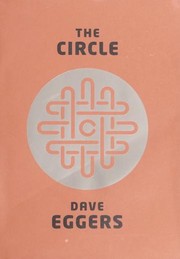
  8. 8.The Circle

    Dave Eggers, 2013

    Also unease and power. Mae joins the world's most admired tech company, where total transparency is the mission, and discovers what being fully seen costs.

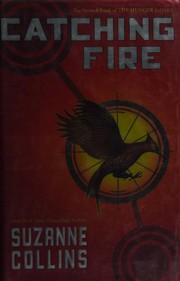
  9. 10.Catching Fire

    Suzanne Collins, 2008

    Also freedom and dread. In a dystopian America, survival means a dangerous dance between rebellion and the crushing power of a totalitarian Capitol.

Read pages from books like this, one at a time

BookFeed is a feed of real passages from real books. It learns what moves you and finds your next book.

Open BookFeed

Free, no sign-up.