
Stoner
John Williams, 1965
Historical fiction Literary fictionContemporary fiction
A farm boy becomes a literature professor in Missouri and learns what a quiet life can hold and cost.
Feels like melancholy and tenderness. About adventure.
A page from the book
Love as something built moment by moment, not a state you fall into.
In his extreme youth Stoner had thought of love as an absolute state of being to which, if one were lucky, one might find access; in his maturity he had decided it was the heaven of a false religion, toward which one ought to gaze with an amused disbelief, a gently familiar contempt, and an embarrassed nostalgia. Now in his middle age he began to know that it was neither a state of grace nor an illusion; he saw it as a human act of becoming, a condition that was invented and modified moment by moment and day by day, by the will and the intelligence and the heart. John Williams.Stoner sold modestly on publication in 1965 and became a bestseller in Europe decades later, long after John Williams's death.
Books that feel like this

Where to get it
Some of these links earn us a small commission, at no cost to you. It keeps BookFeed free.
Questions readers ask
- What is Stoner like?
- Feels like melancholy and tenderness. About adventure.
- What should I read after Stoner?
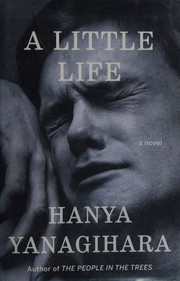
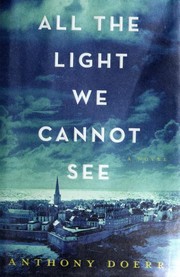
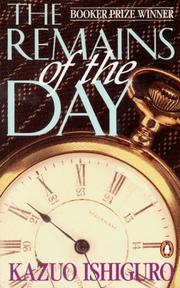
- If you liked Stoner, try A Little Life (Hanya Yanagihara), All the Light We Cannot See (Anthony Doerr) and The Remains of the Day (Kazuo Ishiguro).
A taste of the feed
The stone
“And so the stone fell out of history. Until one day, when a French diamond trader, during a trip to the Golconda Mines in India, was shown a massive pear-cut diamond. One hundred and thirty-three carats. Near-perfect clarity. As big as a pigeon’s egg, he wrote, and as blue as the sea, but with a flare of red at its core. He made a casting of the stone and sent it to a gem-crazy duke in Lorraine, warning him of the rumors of a curse. But the duke wanted the diamond very badly. So the trader brought it to Europe, and the duke fitted it into the end of a walking stick and carried it everywhere.”
All the Light We Cannot See · Anthony Doerr
What the vacuum of space would do to a human body, precisely.
The flight deck and the mid-deck—where the astronauts live and work on the shuttle—are pressurized to mimic the atmosphere on Earth’s surface. But the payload bay—where the satellites are held until they are deployed—is not. It is exposed to the vacuum of space. Which means if Ford and Griff were to enter it without their space suits, all of the oxygen would be sucked out of their lungs and bloodstream instantly, causing them to pass out within fifteen seconds and be dead within two minutes.
Atmosphere · Taylor Jenkins Reid
Why we trap a torn ticket stub under glass.
How is it, Theo wondered, that a piece of paper - a letter, a photo, a ticket stub, a sketch, a painting - is suddenly transformed by placing it in four bits of wood beneath a pane of glass? What does it mean that we place permanent boundaries around transient moments? What does it say of humankind that we take such trouble to freeze specific memories, that we devote such energy to capturing and preserving the “minute particulars” of our lives?
Theo of Golden · Allen Levi
Read pages from books like this, one at a time
Keep reading in the feed