BookFeed Ελληνικά

Books like Τι φοβάται το Ισραήλ από την Παλαιστίνη

If Τι φοβάται το Ισραήλ από την Παλαιστίνη stayed with you, these share its feel: curiosity, nature and power. Each comes with a real page, so you can tell in a minute.

About Τι φοβάται το Ισραήλ από την Παλαιστίνη · Raja Shehadeh

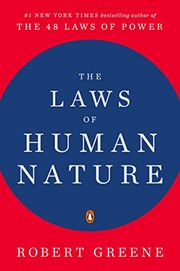
  1. 1.The Laws of Human Nature

    Robert Greene, 2018

    Also curiosity and power. A manual on power and self-knowledge that reads history's operators—Pericles, con artists, leaders—to show why we act against our own interests.

    “I could give you many other reasons,” he concluded, “why you should feel confident in ultimate victory, if only you will make up your minds not to add to the empire while the war is in progress, and not to go out of your way to involve yourselves in new perils. What I fear is not the enemy’s strategy but our own mistakes.” The novelty of what he was proposing aroused great debate. Neither hawks nor doves were satisfied with his plan, but in the end, his reputation for wisdom carried the day and his strategy was approved. Several months later the fateful war began.
    Excerpt from The Laws of Human Nature, Robert Greene, Penguin Books 2018. Quoted for discovery. Source Rights & removals
  2. 2.Decision Points

    George W. Bush, 2010

    Also power and curiosity. An unflinching look at the highest levels of power, grappling with financial collapse, foreign wars, and the relentless weight of public expectation.

    I was furious the situation had reached this point. A relatively small group of people—many on Wall Street, some not—had gambled that the housing market would keep booming forever. It didn’t. In a normal environment, the free market would render its judgment and they could fail.
    Excerpt from Decision Points, George W. Bush, Crown 2010. Quoted for discovery. Source Rights & removals
  3. 3.Sapiens

    Yuval Noah Harari, 2011

    Also curiosity and power. A historian retells the whole human story as one argument: that we conquered the world by learning to believe in things that aren't there.

    One of history’s few iron laws is that luxuries tend to become necessities and to spawn new obligations. Once people get used to a certain luxury, they take it for granted. Then they begin to count on it. Finally, they reach a point where they can’t live without it.
    Excerpt from Sapiens, Yuval Noah Harari 2011. Quoted for discovery. Source Rights & removals
  4. 4.The Psychology of Money

    Morgan Housel, 2020

    Also curiosity and power. A short, story-driven look at why smart people make strange money decisions—and how luck, fear, patience and ego shape what we do with what we have.

    Be nicer and less flashy. No one is impressed with your possessions as much as you are. You might think you want a fancy car or a nice watch. But what you probably want is respect and admiration. And you’re more likely to gain those things through kindness and humility than horsepower and chrome.
    Excerpt from The Psychology of Money, Morgan Housel 2020. Quoted for discovery. Source Rights & removals
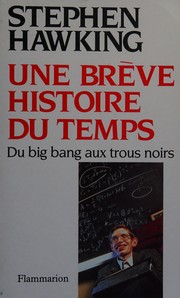
  5. 5.A Brief History of Time

    Stephen W. Hawking, 1988

    Also curiosity. A physicist's guide to the biggest questions—time, black holes, the origin of the universe—written for readers who thought they couldn't do physics.

    Even if there is only one possible unified theory, it is just a set of rules and equations. What is it that breathes fire into the equations and makes a universe for them to describe? The usual approach of science of constructing a mathematical model cannot answer the questions of why there should be a universe for the model to describe. Why does the universe go to all the bother of existing?
    Excerpt from A Brief History of Time, Stephen W. Hawking, Bantam 1988. Quoted for discovery. Source Rights & removals
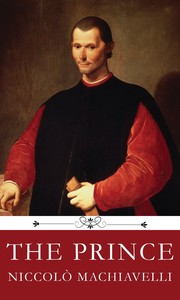
  6. 6.The Prince

    Niccolò Machiavelli, 1532

    Also power and curiosity. A short, cool manual on how power is won and kept, written by a man who watched it up close. Its blunt realism still unsettles, and it still explains how leaders behave.

    A prince, therefore, being compelled knowingly to adopt the beast, ought to choose the fox and the lion; because the lion cannot defend himself against snares and the fox cannot defend himself against wolves. Therefore, it is necessary to be a fox to discover the snares and a lion to terrify the wolves. Those who rely simply on the lion do not understand what they are about. Therefore a wise lord cannot, nor ought he to, keep faith when such observance may be turned against him, and when the reasons that caused him to pledge it exist no longer. If men were entirely good this precept would not hold, but because they are bad, and will not keep faith with you, you too are not bound to observe it with them. Nor will there ever be wanting to a prince legitimate reasons to excuse this non-observance.

Read pages from books like this, one at a time

BookFeed is a feed of real passages from real books. It learns what moves you and finds your next book.

Open BookFeed

Free, no sign-up.