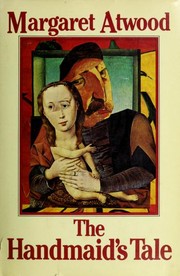
The Handmaid's Tale
Margaret Atwood, 1985
A woman survives in a theocratic state where her body is a resource; her wry, precise voice reports the daily cost of obedience.
 BookFeed Ελληνικά
Atwood's speculative fiction tends to be cool and exact on the surface and uneasy underneath: her narrators notice everything, including what they cannot say aloud, and the worlds they live in feel close enough to ours to keep you looking sideways at the news. Start with «The Handmaid's Tale» if you want a single, tightly controlled voice reporting the daily arithmetic of a regime that has made her body a resource; start with «Oryx and Crake» if you'd rather move through a broken world by memory, with a man on a beach piecing together how it ended up this way.
Feels like unease, power and society.
Start with The Handmaid's Tale.
Atwood has said she invented nothing in the novel that hadn't happened somewhere in history; its epilogue takes the form of a future academic lecture.
The endearing details that make a monster seem human.
He was not a monster, to her. Probably he had some endearing trait: he whistled, off key, in the shower, he had a yen for truffles, he called his dog Liebchen and made it sit up for little pieces of raw steak. How easy it is to invent a humanity, for anyone at all. Margaret Atwood, 1985
A woman survives in a theocratic state where her body is a resource; her wry, precise voice reports the daily cost of obedience.
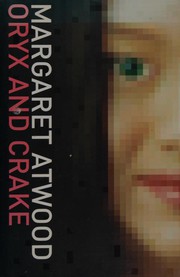
Margaret Atwood, 2003
A man called Snowman survives on a beach among green-eyed children, haunted by a world of engineered animals and lost time. Atwood’s speculative dystopia of memory and myth.
Read pages from books like this, one at a time
BookFeed is a feed of real passages from real books. It learns what moves you and finds your next book.
Open BookFeedFree, no sign-up.