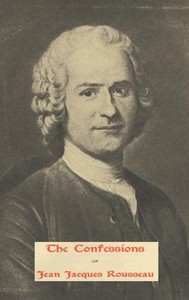
Σελίδες από το «Οι Εξομολογήσεις» που στέκονται μόνες τους, διαλεγμένες για το πώς διαβάζονται σήμερα. Το κείμενο ανήκει στο κοινό κτήμα.
Όταν στερεύει η ελπίδα, η μνήμη μπορεί να γίνει καλύτερο μέρος για να ζεις.
Nothing that passed during that charming epocha, nothing that I did, said, or thought, has escaped my memory. The time that preceded or followed it, I only recollect by intervals, unequally and confused; but here I remember all as distinctly as if it existed at this moment. Imagination, which in my youth was perpetually anticipating the future, but now takes a retrograde course, makes some amends by these charming recollections for the deprivation of hope, which I have lost forever. I no longer see anything in the future that can tempt my wishes, it is a recollection of the past alone that can flatter me, and the remembrance of the period I am now describing is so true and lively, that it sometimes makes me happy, even in spite of my misfortunes.
— Οι Εξομολογήσεις, Jean-Jacques Rousseau (1782)
Γιατί οι πιο σύντομοι έρωτες μπορεί να σημαίνουν περισσότερα από όσους προχωρούν παραπέρα.
Those who read this will not fail to laugh at my gallantries, and remark, that after very promising preliminaries, my most forward adventures concluded by a kiss of the hand: yet be not mistaken, reader, in your estimate of my enjoyments; I have, perhaps, tasted more real pleasure in my amours, which concluded by a kiss of the hand, than you will ever have in yours, which, at least, begin there.
— Οι Εξομολογήσεις, Jean-Jacques Rousseau (1782)
Η παράξενη θλίψη όταν ζεις τη ζωή που φαντάστηκες, έστω για μια στιγμή.
I never recollect to have enjoyed the future with such force of illusions as at that time; and what has particularly struck me in the recollection of this reverie, is that when realized, I found my situation exactly as I had imagined it. If ever waking dream had an appearance of a prophetic vision, it was assuredly this; I was only deceived in its imaginary duration, for days, years, and life itself, passed ideally in perfect tranquility, while the reality lasted but a moment. Alas! my most durable happiness was but as a dream, which I had no sooner had a glimpse of, than I instantly awoke.
— Οι Εξομολογήσεις, Jean-Jacques Rousseau (1782)
Ένας συγγραφέας σε προκαλεί να τον κρίνεις στις επόμενες δύο ή τρεις σελίδες.
If there be a circumstance in my life, which describes my nature, it is that which I am going to relate. The forcible manner in which I at this moment recollect the object of my book, will here make me hold in contempt the false delicacy which would prevent me from fulfilling it. Whoever you may be who are desirous of knowing a man, have the courage to read the two or three following pages, and you will become fully acquainted with J. J. Rousseau.
— Οι Εξομολογήσεις, Jean-Jacques Rousseau (1782)
Πώς ένας μακρύς περίπατος γίνεται εργαστήρι για το μέλλον που θέλεις.
I was a fortnight making the journey, which I may reckon among the happiest days of my life. I was young, in perfect health, with plenty of money, and the most brilliant hopes, add to this, I was on foot, and alone. It may appear strange, I should mention the latter circumstance as advantageous, if my peculiarity of temper is not already familiar to the reader. I was continually occupied with a variety of pleasing chimeras, and never did the warmth of my imagination produce more magnificent ones. When offered an empty place in a carriage, or any person accosted me on the road, how vexed was I to see that fortune overthrown, whose edifice, while walking, I had taken such pains to rear.
— Οι Εξομολογήσεις, Jean-Jacques Rousseau (1782)
Ένα γεύμα σχεδόν από το τίποτα που ξεπερνά τα εκλεκτότερα δείπνα της πόλης.
We dined in the kitchen; the two friends were seated on the benches, one on each side the long table, and their guest at the end, between them, on a three—legged stool. What a dinner! how charming the remembrance! While we can enjoy, at so small an expense, such pure, such true delights, why should we be solicitous for others? Never did those ‘petite soupes’, so celebrated in Paris, equal this; I do not only say for real pleasure and gayety, but even for sensuality.
— Οι Εξομολογήσεις, Jean-Jacques Rousseau (1782)
Γιατί η καλοσύνη μοιάζει να αραιώνει όσο πιο ψηλά ανεβαίνεις.
Having found so many good people in my youth, why do I find so few in my age? Is their race extinct? No; but I do not seek them in the same situation I did formerly, among the commonality, where violent passions predominate only at intervals, and where nature speaks her genuine sentiments. In more elevated stations they are entirely smothered, and under the mask of sentiment, only interest or vanity is heard.
— Οι Εξομολογήσεις, Jean-Jacques Rousseau (1782)
Ένας συγγραφέας που σκέφτεται μόνο περπατώντας ή μέσα στο σκοτάδι.
Never could I do anything when placed at a table, pen in hand; it must be walking among the rocks, or in the woods; it is at night in my bed, during my wakeful hours, that I compose; it may be judged how slowly, particularly for a man who has not the advantage of verbal memory, and never in his life could retain by heart six verses.
Ένας φιλόσοφος του 18ου αιώνα ξεμπροστιάζει τον εαυτό του: ματαιοδοξία, τρυφερότητα, ντροπή και ατέλειωτοι περίπατοι, γραμμένα για να τον κρίνουμε. Διαβάζεται σαν το πρώτο σύγχρονο απομνημόνευμα και είναι συχνά αστείο.
Διάβασε σελίδες από βιβλία σαν αυτό, μία τη φορά
Το BookFeed είναι μια ροή με αποσπάσματα από βιβλία. Μαθαίνει τι σου αρέσει και σε βοηθά να βρεις το επόμενο βιβλίο σου.