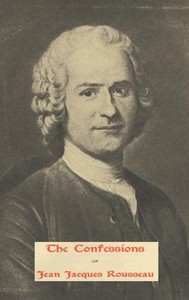
The Confessions of Jean Jacques Rousseau
Jean-Jacques Rousseau, 1782
An eighteenth-century philosopher tells on himself: vanity, tenderness, shame and long walks, written to be judged. It reads like the first modern memoir, and it is often funny.
 BookFeed Ελληνικά
Pages from The Confessions of Jean Jacques Rousseau that stand on their own, chosen for how they read today. The text is in the public domain.
When hope runs out, memory can become the better place to live.
Nothing that passed during that charming epocha, nothing that I did, said, or thought, has escaped my memory. The time that preceded or followed it, I only recollect by intervals, unequally and confused; but here I remember all as distinctly as if it existed at this moment. Imagination, which in my youth was perpetually anticipating the future, but now takes a retrograde course, makes some amends by these charming recollections for the deprivation of hope, which I have lost forever. I no longer see anything in the future that can tempt my wishes, it is a recollection of the past alone that can flatter me, and the remembrance of the period I am now describing is so true and lively, that it sometimes makes me happy, even in spite of my misfortunes. Why the shortest romances can hold more than the ones that go further.
Those who read this will not fail to laugh at my gallantries, and remark, that after very promising preliminaries, my most forward adventures concluded by a kiss of the hand: yet be not mistaken, reader, in your estimate of my enjoyments; I have, perhaps, tasted more real pleasure in my amours, which concluded by a kiss of the hand, than you will ever have in yours, which, at least, begin there. The strange grief of getting the life you imagined, only briefly.
I never recollect to have enjoyed the future with such force of illusions as at that time; and what has particularly struck me in the recollection of this reverie, is that when realized, I found my situation exactly as I had imagined it. If ever waking dream had an appearance of a prophetic vision, it was assuredly this; I was only deceived in its imaginary duration, for days, years, and life itself, passed ideally in perfect tranquility, while the reality lasted but a moment. Alas! my most durable happiness was but as a dream, which I had no sooner had a glimpse of, than I instantly awoke. A writer dares you to judge him on the next two pages.
If there be a circumstance in my life, which describes my nature, it is that which I am going to relate. The forcible manner in which I at this moment recollect the object of my book, will here make me hold in contempt the false delicacy which would prevent me from fulfilling it. Whoever you may be who are desirous of knowing a man, have the courage to read the two or three following pages, and you will become fully acquainted with J. J. Rousseau. How a long walk alone becomes a workshop for the future you want.
I was a fortnight making the journey, which I may reckon among the happiest days of my life. I was young, in perfect health, with plenty of money, and the most brilliant hopes, add to this, I was on foot, and alone. It may appear strange, I should mention the latter circumstance as advantageous, if my peculiarity of temper is not already familiar to the reader. I was continually occupied with a variety of pleasing chimeras, and never did the warmth of my imagination produce more magnificent ones. When offered an empty place in a carriage, or any person accosted me on the road, how vexed was I to see that fortune overthrown, whose edifice, while walking, I had taken such pains to rear. A meal of almost nothing that outshines the finest suppers in the city.
We dined in the kitchen; the two friends were seated on the benches, one on each side the long table, and their guest at the end, between them, on a three—legged stool. What a dinner! how charming the remembrance! While we can enjoy, at so small an expense, such pure, such true delights, why should we be solicitous for others? Never did those ‘petite soupes’, so celebrated in Paris, equal this; I do not only say for real pleasure and gayety, but even for sensuality. Why kindness seems to thin out the higher you climb.
Having found so many good people in my youth, why do I find so few in my age? Is their race extinct? No; but I do not seek them in the same situation I did formerly, among the commonality, where violent passions predominate only at intervals, and where nature speaks her genuine sentiments. In more elevated stations they are entirely smothered, and under the mask of sentiment, only interest or vanity is heard. A writer who can only think on his feet, or in the dark.
Never could I do anything when placed at a table, pen in hand; it must be walking among the rocks, or in the woods; it is at night in my bed, during my wakeful hours, that I compose; it may be judged how slowly, particularly for a man who has not the advantage of verbal memory, and never in his life could retain by heart six verses. Jean-Jacques Rousseau, 1782
An eighteenth-century philosopher tells on himself: vanity, tenderness, shame and long walks, written to be judged. It reads like the first modern memoir, and it is often funny.
Read pages from books like this, one at a time
BookFeed is a feed of real passages from real books. It learns what moves you and finds your next book.
Open BookFeedFree, no sign-up.