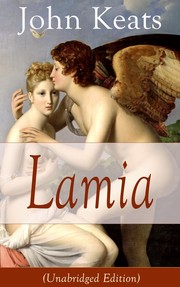
Λάμια
John Keats, 1820
Ένα φίδι γίνεται γυναίκα, ένας φιλόσοφος αρνείται να κοιτάξει αλλού κι ένα συμπόσιο στήνεται από το τίποτα: το ύστερο ποίημα του Κιτς για τη μαγεία απέναντι στην ανάλυση.
 BookFeed English
Σελίδες από το «Λάμια» που στέκονται μόνες τους, διαλεγμένες για το πώς διαβάζονται σήμερα. Το κείμενο ανήκει στο κοινό κτήμα.
Λαμπερή από την κορφή ως τα νύχια, κι όμως θλιμμένη με κάποιον τρόπο.
She was a gordian shape of dazzling hue,Vermilion-spotted, golden, green, and blue;Striped like a zebra, freckled like a pard,Eyed like a peacock, and all crimson barr’d;And full of silver moons, that, as she breathed,Dissolv’d, or brighter shone, or interwreathedTheir lustres with the gloomier tapestries—So rainbow-sided, touch’d with miseries,She seem’d, at once, some penanced lady elf,Some demon’s mistress, or the demon’s self.Upon her crest she wore a wannish fireSprinkled with stars, like Ariadne’s tiar:Her head was serpent, but ah, bitter-sweet!She had a woman’s mouth with all its pearls complete: Τι χάνεται κάθε φορά που εξηγούμε κάτι όμορφο.
Upon her aching forehead be there hungThe leaves of willow and of adder’s tongue;And for the youth, quick, let us strip for himThe thyrsus, that his watching eyes may swimInto forgetfulness; and, for the sage,Let spear-grass and the spiteful thistle wageWar on his temples. Do not all charms flyAt the mere touch of cold philosophy?There was an awful rainbow once in heaven:We know her woof, her texture; she is givenIn the dull catalogue of common things. Η άβολη αριθμητική του έρωτα και του χρήματος.
Love in a hut, with water and a crust,Is—Love, forgive us!—cinders, ashes, dust;Love in a palace is perhaps at lastMore grievous torment than a hermit’s fast—That is a doubtful tale from faery land,Hard for the non-elect to understand. Μια πόλη τη νύχτα, που μουρμουρίζει σαν καταιγίδα που δεν έχει ξεσπάσει ακόμη.
As men talk in a dream, so Corinth all,Throughout her palaces imperial,And all her populous streets and temples lewd,Mutter’d, like tempest in the distance brew’d,To the wide-spreaded night above her towers.Men, women, rich and poor, in the cool hours,Shuffled their sandals o’er the pavement white,Companion’d or alone; while many a lightFlared, here and there, from wealthy festivals,And threw their moving shadows on the walls,Or found them cluster’d in the corniced shadeOf some arch’d temple door, or dusky colonnade. Η ώρα του γλεντιού που το δωμάτιο παύει να μοιάζει με δωμάτιο.
Soft went the music the soft air along,While fluent Greek a vowel’d undersongKept up among the guests discoursing lowAt first, for scarcely was the wine at flow;But when the happy vintage touch’d their brains,Louder they talk, and louder come the strainsOf powerful instruments—the gorgeous dyes,The space, the splendour of the draperies,The roof of awful richness, nectarous cheer,Beautiful slaves, and Lamia’s self, appear,Now, when the wine has done its rosy deed,And every soul from human trammels freed,No more so strange; for merry wine, sweet wine,Will make Elysian shades not too fair, too divine. Μια γυναίκα που ξέρει να ορίζει πού τελειώνει η ηδονή κι αρχίζει ο πόνος.
Ah, happy Lycius!—for she was a maidMore beautiful than ever twisted braid,Or sigh’d, or blush’d, or on spring-flowered leaSpread a green kirtle to the minstrelsy:A virgin purest lipp’d, yet in the loreOf love deep learned to the red heart’s core:Not one hour old, yet of sciential brainTo unperplex bliss from its neighbour pain;Define their pettish limits, and estrangeTheir points of contact, and swift counterchange;Intrigue with the specious chaos, and dispartIts most ambiguous atoms with sure art; Μια πόρτα που ανοίγει μόνο για τους δυο ανθρώπους για τους οποίους χτίστηκε.
A pillar’d porch, with lofty portal door,Where hung a silver lamp, whose phosphor glowReflected in the slabbed steps below,Mild as a star in water; for so new,And so unsullied was the marble hue,So through the crystal polish, liquid fine,Ran the dark veins, that none but feet divineCould e’er have touch’d there. Το ταβάνι κρατά ένα δεύτερο αντίγραφο από κάθε στεφάνι καπνού.
Of wealthy lustre was the banquet-room,Fill’d with pervading brilliance and perfume:Before each lucid pannel fuming stoodA censer fed with myrrh and spiced wood,Each by a sacred tripod held aloft,Whose slender feet wide-swerv’d upon the softWool-woofed carpets: fifty wreaths of smokeFrom fifty censers their light voyage tookTo the high roof, still mimick’d as they roseAlong the mirror’d walls by twin-clouds odorous. John Keats, 1820
Ένα φίδι γίνεται γυναίκα, ένας φιλόσοφος αρνείται να κοιτάξει αλλού κι ένα συμπόσιο στήνεται από το τίποτα: το ύστερο ποίημα του Κιτς για τη μαγεία απέναντι στην ανάλυση.
Διάβασε σελίδες από βιβλία σαν αυτό, μία τη φορά
Το BookFeed είναι μια ροή με αποσπάσματα από βιβλία. Μαθαίνει τι σου αρέσει και σε βοηθά να βρεις το επόμενο βιβλίο σου.
Άνοιξε το BookFeedΔωρεάν, χωρίς εγγραφή.