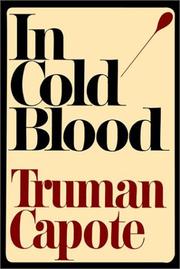
In Cold Blood
Truman Capote, 1966
The murder of a Kansas farm family becomes a portrait of a town, two killers, and the machinery of justice—the book that invented the nonfiction novel.
 BookFeed Ελληνικά
Capote spent six years on the book and brought Harper Lee to Kansas to help interview townspeople; the two had been friends since childhood.
Feels like dread, art and curiosity.
The sounds of a small town on the last night it feels ordinary.
Until one morning in mid-November of 1959, few Americans—in fact, few Kansans—had ever heard of Holcomb. Like the waters of the river, like the motorists on the highway, and like the yellow trains streaking down the Santa Fe tracks, drama, in the shape of exceptional happenings, had never stopped there. The inhabitants of the village, numbering two hundred and seventy, were satisfied that this should be so, quite content to exist inside ordinary life—to work, to hunt, to watch television, to attend school socials, choir practice, meetings of the 4-H Club. But then, in the earliest hours of that morning in November, a Sunday morning, certain foreign sounds impinged on the normal nightly Holcomb noises—on the keening hysteria of coyotes, the dry scrape of scuttling tumbleweed, the racing, receding wail of locomotive whistles. Truman Capote, 1966
The murder of a Kansas farm family becomes a portrait of a town, two killers, and the machinery of justice—the book that invented the nonfiction novel.
Read pages from books like this, one at a time
BookFeed is a feed of real passages from real books. It learns what moves you and finds your next book.
Open BookFeedFree, no sign-up.