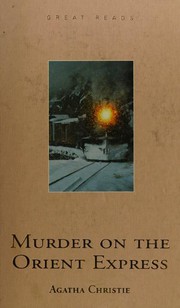
Murder on the Orient Express
Agatha Christie, 1934
One murdered passenger, a compartment locked from the inside, and a small Belgian who reads lies better than anyone. A closed-circle puzzle at its purest.
 BookFeed Ελληνικά
A Christie novel is less a whodunit than a closed room you agree to be locked into: a train stuck in a snowdrift, a riverboat with no way off, an island cut off from the shore. Inside that room, people are polite, observant and not quite honest, and the pleasure is in watching a quiet mind sort the lies from the facts. If you want to begin, try «Murder on the Orient Express», which keeps everything in one snowbound carriage and lets Poirot work a puzzle with almost no exits, or «And Then There Were None», where ten strangers on an island are picked off one by one and the nursery rhyme on the wall becomes the plot itself.
Feels like curiosity, death and dread.
Start with Murder on the Orient Express.
Christie first rode the Orient Express alone in 1928, from Istanbul; the Paris–Istanbul sleeper of her day was a luxury hotel on wheels with a dining car and a salon.
A detective grades a crime by the nationality of the mind behind it.
I have the little idea, my friend, that this is a crime very carefully planned and staged. It is a far-sighted, long-headed crime. It is not — how shall I express it? — a Latin crime. It is a crime that shows traces of a cool, resourceful, deliberate brain — I think an Anglo-Saxon brain. Agatha Christie, 1934
One murdered passenger, a compartment locked from the inside, and a small Belgian who reads lies better than anyone. A closed-circle puzzle at its purest.
Agatha Christie, 1937
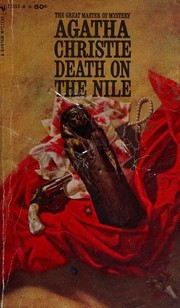
A Nile cruise, a honeymoon, and a murder among strangers who all have a reason. Poirot, on holiday, must untangle a knot of jealousy before the boat docks.
Agatha Christie, 1975
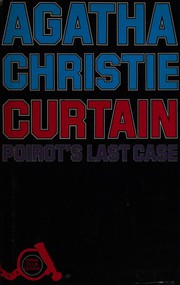
An ageing Poirot returns to Styles, the scene of his first case, to hunt a murderer who leaves no trace and seems always one step ahead.
Agatha Christie, 1939
Ten strangers are invited to an island where a nursery rhyme starts coming true; Christie's most airtight trap, and her most human.
Read pages from books like this, one at a time
BookFeed is a feed of real passages from real books. It learns what moves you and finds your next book.
Open BookFeedFree, no sign-up.