The Prince
Niccolò Machiavelli, 1532
A short, cool manual on how power is won and kept, written by a man who watched it up close. Its blunt realism still unsettles, and it still explains how leaders behave.
 BookFeed Ελληνικά
1469–1527
Machiavelli writes like a man who has seen the back rooms and wants you to know what actually happens there. Both books share a cool, practical tone: he argues from examples, names names, and refuses to flatter. Start with «The Prince» if you want the compact, unsettling account of how power is taken and held; turn to «Discourses on Livy» if you would rather follow him through Roman history as he asks why republics rise, decay, and repeat the same conflicts.
Feels like power, curiosity and unease.
Start with The Prince.
Machiavelli was tortured on the strappado in 1513 on suspicion of plotting against the Medici. Soon after his release he wrote The Prince, and it was published only after his death.
Two animals, each helpless without the other, and what survival asks of you.
A prince, therefore, being compelled knowingly to adopt the beast, ought to choose the fox and the lion; because the lion cannot defend himself against snares and the fox cannot defend himself against wolves. Therefore, it is necessary to be a fox to discover the snares and a lion to terrify the wolves. Those who rely simply on the lion do not understand what they are about. Therefore a wise lord cannot, nor ought he to, keep faith when such observance may be turned against him, and when the reasons that caused him to pledge it exist no longer. If men were entirely good this precept would not hold, but because they are bad, and will not keep faith with you, you too are not bound to observe it with them. Nor will there ever be wanting to a prince legitimate reasons to excuse this non-observance. Niccolò Machiavelli, 1532
A short, cool manual on how power is won and kept, written by a man who watched it up close. Its blunt realism still unsettles, and it still explains how leaders behave.
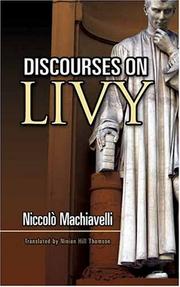
Niccolò Machiavelli, 1531
Machiavelli reads Rome's history to ask how republics win, corrupt, and fall—and why the same appetites keep returning in every city.
Read pages from books like this, one at a time
BookFeed is a feed of real passages from real books. It learns what moves you and finds your next book.
Open BookFeedFree, no sign-up.