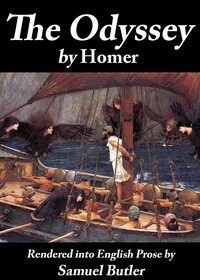
Οδύσσεια
Homer, -750
Μια ιστορία επιστροφής, όπου ο ήρωας χάνει πλοία, συντρόφους και χρόνια, ανάμεσα σε τέρατα, θεές και μια γυναίκα που περιμένει. Η πεζή μετάφραση του Μπάτλερ διαβάζεται σαν ταξιδιωτικό χρονικό.
 BookFeed English
Σελίδες από το «Οδύσσεια» που στέκονται μόνες τους, διαλεγμένες για το πώς διαβάζονται σήμερα. Το κείμενο ανήκει στο κοινό κτήμα.
Απλώνεις τα χέρια σε κάποιον που αγαπάς και τα κλείνεις στο κενό.
“Then I tried to find some way of embracing my poor mother’s ghost. Thrice I sprang towards her and tried to clasp her in my arms, but each time she flitted from my embrace as it were a dream or phantom, and being touched to the quick I said to her, ‘Mother, why do you not stay still when I would embrace you? If we could throw our arms around one another we might find sad comfort in the sharing of our sorrows even in the house of Hades; does Proserpine want to lay a still further load of grief upon me by mocking me with a phantom only?’ Για μερικούς, τη νύχτα πέφτει το γενναίο προσωπείο της μέρας.
“Stranger, I should like to speak with you briefly about another matter. It is indeed nearly bed time—for those, at least, who can sleep in spite of sorrow. As for myself, heaven has given me a life of such unmeasurable woe, that even by day when I am attending to my duties and looking after the servants, I am still weeping and lamenting during the whole time; then, when night comes, and we all of us go to bed, I lie awake thinking, and my heart becomes a prey to the most incessant and cruel tortures. Γιατί ένας ζητιάνος λέει σ’ έναν πλούσιο πως η τύχη του είναι δανεική.
Man is the vainest of all creatures that have their being upon earth. As long as heaven vouchsafes him health and strength, he thinks that he shall come to no harm hereafter, and even when the blessed gods bring sorrow upon him, he bears it as he needs must, and makes the best of it; for God almighty gives men their daily minds day by day. Ένα κρεβάτι από φύλλα κάτω από δύο δέντρα που έχουν γίνει ένα.
In the end he deemed it best to take to the woods, and he found one upon some high ground not far from the water. There he crept beneath two shoots of olive that grew from a single stock—the one an ungrafted sucker, while the other had been grafted. No wind, however squally, could break through the cover they afforded, nor could the sun’s rays pierce them, nor the rain get through them, so closely did they grow into one another. Ulysses crept under these and began to make himself a bed to lie on, for there was a great litter of dead leaves lying about—enough to make a covering for two or three men even in hard winter weather. He was glad enough to see this, so he laid himself down and heaped the leaves all round him. Ένας άνθρωπος με σπίτι γεμάτο θησαυρούς θα τα έδινε όλα πίσω.
I often grieve, as I sit here in my house, for one and all of them. At times I cry aloud for sorrow, but presently I leave off again, for crying is cold comfort and one soon tires of it. Yet grieve for these as I may, I do so for one man more than for them all. I cannot even think of him without loathing both food and sleep, so miserable does he make me, for no one of all the Achaeans worked so hard or risked so much as he did. Πόσο κοστίζει να κρατιέσαι από το μόνο στέρεο πράγμα που βλέπεις.
He caught hold of the rock with both hands and clung to it groaning with pain till the wave retired, so he was saved that time; but presently the wave came on again and carried him back with it far into the sea—tearing his hands as the suckers of a polypus are torn when some one plucks it from its bed, and the stones come up along with it—even so did the rocks tear the skin from his strong hands, and then the wave drew him deep down under the water. Ένα έργο όπου η τελευταία στιγμή φέρνει πάλι την αρχή.
“And I saw Sisyphus at his endless task raising his prodigious stone with both his hands. With hands and feet he tried to roll it up to the top of the hill, but always, just before he could roll it over on to the other side, its weight would be too much for him, and the pitiless stone98 would come thundering down again on to the plain. Then he would begin trying to push it up hill again, and the sweat ran off him and the steam rose after him. Το πιο γρήγορο πλοίο του ποιήματος κουβαλά έναν άνθρωπο που κοιμάται.
The ship bounded forward on her way as a four in hand chariot flies over the course when the horses feel the whip. Her prow curvetted as it were the neck of a stallion, and a great wave of dark blue water seethed in her wake. She held steadily on her course, and even a falcon, swiftest of all birds, could not have kept pace with her. Thus, then, she cut her way through the water, carrying one who was as cunning as the gods, but who was now sleeping peacefully, forgetful of all that he had suffered both on the field of battle and by the waves of the weary sea. Ο αρχαιότερος τρόπος ν’ αρχίσεις μια ιστορία είναι να ζητήσεις βοήθεια.
Tell me, O Muse, of that ingenious hero who travelled far and wide after he had sacked the famous town of Troy. Many cities did he visit, and many were the nations with whose manners and customs he was acquainted; moreover he suffered much by sea while trying to save his own life and bring his men safely home; but do what he might he could not save his men, for they perished through their own sheer folly in eating the cattle of the Sun-god Hyperion; so the god prevented them from ever reaching home. Tell me, too, about all these things, oh daughter of Jove, from whatsoever source you may know them. Homer, -750
Μια ιστορία επιστροφής, όπου ο ήρωας χάνει πλοία, συντρόφους και χρόνια, ανάμεσα σε τέρατα, θεές και μια γυναίκα που περιμένει. Η πεζή μετάφραση του Μπάτλερ διαβάζεται σαν ταξιδιωτικό χρονικό.
Διάβασε σελίδες από βιβλία σαν αυτό, μία τη φορά
Το BookFeed είναι μια ροή με αποσπάσματα από βιβλία. Μαθαίνει τι σου αρέσει και σε βοηθά να βρεις το επόμενο βιβλίο σου.
Άνοιξε το BookFeedΔωρεάν, χωρίς εγγραφή.