
Talking to Strangers
Malcolm Gladwell, 2019
Psychology Self-developmentPolitics & society
Gladwell argues that our instinct to trust strangers is both society's foundation and its blind spot, and that we misread people we don't know.
Feels like curiosity and unease. About society.
A page from the book
We read strangers in seconds and call it understanding.
We think we can easily see into the hearts of others based on the flimsiest of clues. We jump at the chance to judge strangers. We would never do that to ourselves, of course. We are nuanced and complex and enigmatic. But the stranger is easy. If I can convince you of one thing in this book, let it be this: Strangers are not easy. Malcolm Gladwell.Malcolm Gladwell was born in England, raised in Canada, and has been a staff writer at The New Yorker since 1996.
Books that feel like this


More by Malcolm Gladwell

Outliers
Malcolm Gladwell, 2008
Why the successful are rarely self-made: birthdays, ten-thousand-hour apprenticeships and one lucky terminal, arguing that opportunity is handed out far less evenly than we admit.
The Tipping Point
Malcolm Gladwell, 2000
Why do some ideas, products and habits explode while better ones vanish? Gladwell hunts for the small, surprising levers that make change contagious.
Where to get it
Some of these links earn us a small commission, at no cost to you. It keeps BookFeed free.
Questions readers ask
- What is Talking to Strangers like?
- Feels like curiosity and unease. About society.
- What should I read after Talking to Strangers?
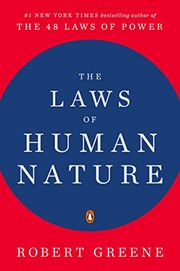
- If you liked Talking to Strangers, try The Laws of Human Nature (Robert Greene), Good to Great (Jim Collins) and Atomic Habits (James Clear).
A taste of the feed
He did not want a statue. He wanted a city that could live without him.
“I could give you many other reasons,” he concluded, “why you should feel confident in ultimate victory, if only you will make up your minds not to add to the empire while the war is in progress, and not to go out of your way to involve yourselves in new perils. What I fear is not the enemy’s strategy but our own mistakes.” The novelty of what he was proposing aroused great debate. Neither hawks nor doves were satisfied with his plan, but in the end, his reputation for wisdom carried the day and his strategy was approved. Several months later the fateful war began.
The Laws of Human Nature · Robert Greene
What if the destination matters less than who is sitting beside you?
For no matter what we achieve, if we don’t spend the vast majority of our time with people we love and respect, we cannot possibly have a great life. But if we spend the vast majority of our time with people we love and respect – people we really enjoy being on the bus with and who will never disappoint us – then we will almost certainly have a great life, no matter where the bus goes. The people we interviewed from the good-to-great companies clearly loved what they did, largely because they loved who they did it with.
Good to Great · Jim Collins
A few degrees at takeoff, a different city entirely.
The impact created by a change in your habits is similar to the effect of shifting the route of an airplane by just a few degrees. Imagine you are flying from Los Angeles to New York City. If a pilot leaving from LAX adjusts the heading just 3.5 degrees south, you will land in Washington, D.C., instead of New York. Such a small change is barely noticeable at takeoff—the nose of the airplane moves just a few feet—but when magnified across the entire United States, you end up hundreds of miles apart.
Atomic Habits · James Clear
Read pages from books like this, one at a time
Keep reading in the feed