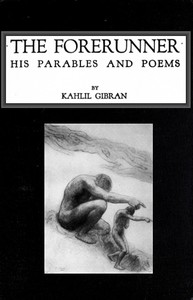
The Forerunner
Kahlil Gibran, 1892
An allegorical journey into the deepest chambers of the human heart, where wisdom is found not in answers, but in the language of nature and solitude.
 BookFeed Ελληνικά
1883–1931
Gibran's parables read like fables told at dusk: brief, strange, and quietly unsettling, with a warmth underneath the oddness. «The Madman» is the place to start, a slim set of stories in which a man drops his masks and talks plainly about grief, friendship, and the selves we keep hidden. «The Forerunner» works the same ground, turning to nature and solitude for its images rather than to argument, and if you like one you will likely want the other.
Feels like melancholy, wonder and memory.
Start with The Forerunner.
Gibran’s work is deeply influenced by Sufism and Messianism, blending ancient Arabic wisdom with modern poetic sensibility.
When opposing forces find common ground, what does that common ground look like?
They say the jackal and the moleDrink from the self-same streamWhere the lion comes to drink.And they say the eagle and the vultureDig their beaks into the same carcass,And are at peace, one with the other,In the presence of the dead thing.O love, whose lordly handHas bridled my desires,And raised my hunger and my thirstTo dignity and pride,Let not the strong in me and the constantEat the bread or drink the wineThat tempt my weaker self. Kahlil Gibran, 1892
An allegorical journey into the deepest chambers of the human heart, where wisdom is found not in answers, but in the language of nature and solitude.
Kahlil Gibran, 1918
A madman strips off his masks and speaks in parables about friendship, defeat, grief, and the selves we hide.
Read pages from books like this, one at a time
BookFeed is a feed of real passages from real books. It learns what moves you and finds your next book.
Open BookFeedFree, no sign-up.