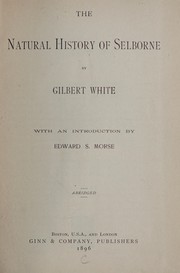
The Natural History of Selborne
Gilbert White, 1789
A country clergyman spends forty years watching the birds, worms, echoes and weather of one Hampshire parish, and writes it all down in letters of disarming charm.
 BookFeed Ελληνικά
1720–1793
White lived almost all his life in the Hampshire village he wrote about, and was among the first to tell three look-alike warblers apart by their songs alone.
Feels like wonder, nature and curiosity.
The morning a whole species decides, at once, to leave.
If ever I saw anything like actual migration, it was last Michaelmas-day. I was travelling, and out early in the morning: at first there was a vast fog; but, by the time that I was got seven or eight miles from home towards the coast, the sun broke out into a delicate warm day. We were then on a large heath or common, and I could discern, as the mist began to break away, great numbers of swallows (hirundines rusticae) clustering on the stinted shrubs and bushes, as if they had roosted there all night. As soon as the air became clear and pleasant they all were on the wing at once; and, by a placid and easy flight, proceeded on southward towards the sea: after this I did not see any more flocks, only now and then a straggler. Gilbert White, 1789
A country clergyman spends forty years watching the birds, worms, echoes and weather of one Hampshire parish, and writes it all down in letters of disarming charm.
Read pages from books like this, one at a time
BookFeed is a feed of real passages from real books. It learns what moves you and finds your next book.
Open BookFeedFree, no sign-up.