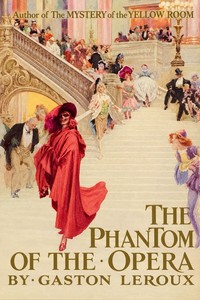
The Phantom of the Opera
Gaston Leroux, 1910
A masked figure haunts the Paris Opera, secretly tutoring a young singer — a gothic thriller about genius, ugliness, and what love demands.
 BookFeed Ελληνικά
1868–1927
Leroux was a courtroom reporter and serial novelist; the Palais Garnier really does have a subterranean water reservoir beneath it, which fed the novel's underground lake.
Feels like dread, love and madness.
The most frightening room in the Opera is a perfectly ordinary one.
After the deceptions and illusions of the torture-chamber, the precision of the details of that quiet little middle-class room seemed to have been invented for the express purpose of puzzling the mind of the mortal rash enough to stray into that abode of living nightmare. The wooden bedstead, the waxed mahogany chairs, the chest of drawers, those brasses, the little square antimacassars carefully placed on the backs of the chairs, the clock on the mantelpiece and the harmless-looking ebony caskets at either end, lastly, the whatnot filled with shells, with red pin-cushions, with mother-of-pearl boats and an enormous ostrich-egg, the whole discreetly lighted by a shaded lamp standing on a small round table: this collection of ugly, peaceable, reasonable furniture, AT THE BOTTOM OF THE OPERA CELLARS, bewildered the imagination more than all the late fantastic happenings. Gaston Leroux, 1910
A masked figure haunts the Paris Opera, secretly tutoring a young singer — a gothic thriller about genius, ugliness, and what love demands.
Read pages from books like this, one at a time
BookFeed is a feed of real passages from real books. It learns what moves you and finds your next book.
Open BookFeedFree, no sign-up.