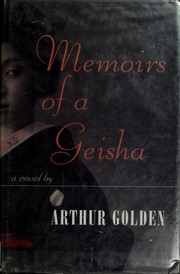
Memoirs of a Geisha
Arthur Golden, 1997
A fisherman's daughter in 1930s Japan is sold into a geisha house and learns to survive by turning memory, manners and performance into art.
 BookFeed Ελληνικά
Arthur Golden, an American, based the novel on interviews with retired geisha Mineko Iwasaki, who later said he had broken her anonymity and sued him.
Feels like longing, memory and nostalgia.
What the sea sounds like to a child who has never left it.
In our little fishing village of Yoroido, I lived in what I called a “tipsy house.” It stood near a cliff where the wind off the ocean was always blowing. As a child it seemed to me as if the ocean had caught a terrible cold, because it was always wheezing and there would be spells when it let out a huge sneeze — which is to say there was a burst of wind with a tremendous spray. I decided our tiny house must have been offended by the ocean sneezing in its face from time to time, and took to leaning back because it wanted to get out of the way. Probably it would have collapsed if my father hadn’t cut a timber from a wrecked fishing boat to prop up the eaves, which made the house look like a tipsy old man leaning on his crutch. Arthur Golden, 1997
A fisherman's daughter in 1930s Japan is sold into a geisha house and learns to survive by turning memory, manners and performance into art.
Read pages from books like this, one at a time
BookFeed is a feed of real passages from real books. It learns what moves you and finds your next book.
Open BookFeedFree, no sign-up.