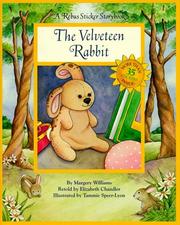
The Velveteen Rabbit
Margery Williams Bianco, 1922
A toy rabbit is loved into reality, worn thin by affection and nearly thrown away — a small book about what love does to the thing that is loved.
 BookFeed
Pages from The Velveteen Rabbit that stand on their own, chosen for how they read today. The text is in the public domain.
What it costs to become real, told by someone who has already paid.
“It doesn’t happen all at once,” said the Skin Horse. “You become. It takes a long time. That’s why it doesn’t happen often to people who break easily, or have sharp edges, or who have to be carefully kept. Generally, by the time you are Real, most of your hair has been loved off, and your eyes drop out and you get loose in the joints and very shabby. But these things don’t matter at all, because once you are Real you can’t be ugly, except to people who don’t understand.” Being loved is a kind of wear, and the wear is the point.
Weeks passed, and the little Rabbit grew very old and shabby, but the Boy loved him just as much. He loved him so hard that he loved all his whiskers off, and the pink lining to his ears turned grey, and his brown spots faded. He even began to lose his shape, and he scarcely looked like a rabbit any more, except to the Boy. To him he was always beautiful, and that was all that the little Rabbit cared about. He didn’t mind how he looked to other people, because the nursery magic had made him Real, and when you are Real shabbiness doesn’t matter. How a familiar garden turns strange when you are the one outside it.
And while the Boy was asleep, dreaming of the seaside, the little Rabbit lay among the old picture-books in the corner behind the fowl-house, and he felt very lonely. The sack had been left untied, and so by wriggling a bit he was able to get his head through the opening and look out. He was shivering a little, for he had always been used to sleeping in a proper bed, and by this time his coat had worn so thin and threadbare from hugging that it was no longer any protection to him. Near by he could see the thicket of raspberry canes, growing tall and close like a tropical jungle, in whose shadow he had played with the Boy on bygone mornings. He thought of those long sunlit hours in the garden-how happy they were-and a great sadness came over him. The moment a forest stops being scenery and becomes a room.
It was light now, for the moon had risen. All the forest was beautiful, and the fronds of the bracken shone like frosted silver. In the open glade between the tree-trunks the wild rabbits danced with their shadows on the velvet grass, but when they saw the Fairy they all stopped dancing and stood round in a ring to stare at her. What it's like to be wanted so much that discomfort stops mattering.
That night, and for many nights after, the Velveteen Rabbit slept in the Boy’s bed. At first he found it rather uncomfortable, for the Boy hugged him very tight, and sometimes he rolled over on him, and sometimes he pushed him so far under the pillow that the Rabbit could scarcely breathe. And he missed, too, those long moonlight hours in the nursery, when all the house was silent, and his talks with the Skin Horse. But very soon he grew to like it, for the Boy used to talk to him, and made nice tunnels for him under the bedclothes that he said were like the burrows the real rabbits lived in. And they had splendid games together, in whispers, when Nana had gone away to her supper and left the night-light burning on the mantelpiece. There is a hierarchy in every nursery, and the newest toys write the rules.
For a long time he lived in the toy cupboard or on the nursery floor, and no one thought very much about him. He was naturally shy, and being only made of velveteen, some of the more expensive toys quite snubbed him. The mechanical toys were very superior, and looked down upon every one else; they were full of modern ideas, and pretended they were real. The model boat, who had lived through two seasons and lost most of his paint, caught the tone from them and never missed an opportunity of referring to his rigging in technical terms. The Rabbit could not claim to be a model of anything, for he didn’t know that real rabbits existed; he thought they were all stuffed with sawdust like himself, and he understood that sawdust was quite out-of-date and should never be mentioned in modern circles. The moment you meet the real thing and see what you are.
They were rabbits like himself, but quite furry and brand-new. They must have been very well made, for their seams didn’t show at all, and they changed shape in a queer way when they moved; one minute they were long and thin and the next minute fat and bunchy, instead of always staying the same like he did. Their feet padded softly on the ground, and they crept quite close to him, twitching their noses, while the Rabbit stared hard to see which side the clockwork stuck out, for he knew that people who jump generally have something to wind them up. But he couldn’t see it. They were evidently a new kind of rabbit altogether. What it feels like to stop being the newest thing in the room.
There were other things in the stocking, nuts and oranges and a toy engine, and chocolate almonds and a clockwork mouse, but the Rabbit was quite the best of all. For at least two hours the Boy loved him, and then Aunts and Uncles came to dinner, and there was a great rustling of tissue paper and unwrapping of parcels, and in the excitement of looking at all the new presents the Velveteen Rabbit was forgotten. Margery Williams Bianco, 1922
A toy rabbit is loved into reality, worn thin by affection and nearly thrown away — a small book about what love does to the thing that is loved.
Read pages from books like this, one at a time
BookFeed is a feed of real passages from real books. It learns what moves you and finds your next book.
Open BookFeedFree, no sign-up.