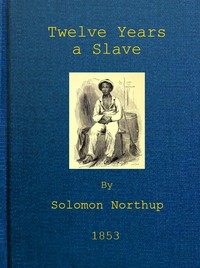
Twelve Years a Slave
Solomon Northup, 1853
Ένας ελεύθερος μαύρος άντρας απάγεται και υποδουλώνεται. Για δώδεκα χρόνια, επιστρατεύει τη μνήμη, τη μουσική και την ακλόνητη ελπίδα του για να επιβιώσει και να καταθέσει τη μαρτυρία του.
 BookFeed English
Σελίδες από το «Twelve Years a Slave» που στέκονται μόνες τους, διαλεγμένες για το πώς διαβάζονται σήμερα. Το κείμενο ανήκει στο κοινό κτήμα.
Στη σκιά του Καπιτωλίου, άνθρωποι πουλιούνται ως σκλάβοι.
The building to which the yard was attached, was two stories high, fronting on one of the public streets of Washington. Its outside presented only the appearance of a quiet private residence. A stranger looking at it, would never have dreamed of its execrable uses. Strange as it may seem, within plain sight of this same house, looking down from its commanding height upon it, was the Capitol. The voices of patriotic representatives boasting of freedom and equality, and the rattling of the poor slave’s chains, almost commingled. A slave pen within the very shadow of the Capitol! Το βιολί τού κρατά συντροφιά όταν όλα τα άλλα λείπουν.
Alas! had it not been for my beloved violin, I scarcely can conceive how I could have endured the long years of bondage. It introduced me to great houses—relieved me of many days’ labor in the field—supplied me with conveniences for my cabin—with pipes and tobacco, and extra pairs of shoes, and oftentimes led me away from the presence of a hard master, to witness scenes of jollity and mirth. It was my companion—the friend of my bosom—triumphing loudly when I was joyful, and uttering its soft, melodious consolations when I was sad. Often, at midnight, when sleep had fled affrighted from the cabin, and my soul was disturbed and troubled with the contemplation of my fate, it would sing me a song of peace. Τι απομένει από έναν άνθρωπο όταν του βάζουν τιμή;
Next day many customers called to examine Freeman’s “new lot.” The latter gentleman was very loquacious, dwelling at much length upon our several good points and qualities. He would make us hold up our heads, walk briskly back and forth, while customers would feel of our hands and arms and bodies, turn us about, ask us what we could do, make us open our mouths and show our teeth, precisely as a jockey examines a horse which he is about to barter for or purchase. Sometimes a man or woman was taken back to the small house in the yard, stripped, and inspected more minutely. Scars upon a slave’s back were considered evidence of a rebellious or unruly spirit, and hurt his sale. Ο ύπνος φέρνει για λίγο κοντά του τα παιδιά του.
They left me in the cabin, that I might rest. Blessed be sleep! It visiteth all alike, descending as the dews of heaven on the bond and free. Soon it nestled to my bosom, driving away the troubles that oppressed it, and bearing me to that shadowy region, where I saw again the faces, and listened to the voices of my children, who, alas, for aught I knew in my waking hours, had fallen into the arms of that other sleep, from which they never would arouse. Η πιο εύθυμη γυναίκα στη φυτεία κουβαλά τα χειρότερα σημάδια.
She had a genial and pleasant temper, and was faithful and obedient. Naturally, she was a joyous creature, a laughing, lighthearted girl, rejoicing in the mere sense of existence. Yet Patsey wept oftener, and suffered more, than any of her companions. She had been literally excoriated. Her back bore the scars of a thousand stripes; not because she was backward in her work, nor because she was of an unmindful and rebellious spirit, but because it had fallen to her lot to be the slave of a licentious master and a jealous mistress. She shrank before the lustful eye of the one, and was in danger even of her life at the hands of the other, and between the two, she was indeed accursed. In the great house, for days together, there were high and angry words, poutings and estrangement, whereof she was the innocent cause. Οι ιστορίες για τη σκλαβιά αλλάζουν όταν μπεις στο χωράφι και στην καλύβα.
There may be humane masters, as there certainly are inhuman ones—there may be slaves well-clothed, well-fed, and happy, as there surely are those half-clad, half-starved and miserable; nevertheless, the institution that tolerates such wrong and inhumanity as I have witnessed, is a cruel, unjust, and barbarous one. Men may write fictions portraying lowly life as it is, or as it is not—may expatiate with owlish gravity upon the bliss of ignorance—discourse flippantly from arm chairs of the pleasures of slave life; but let them toil with him in the field—sleep with him in the cabin—feed with him on husks; let them behold him scourged, hunted, trampled on, and they will come back with another story in their mouths. Κάθε απογοήτευση τρεμοσβήνει το φως της σωτηρίας.
I knew not now whither to look for deliverance. Hopes sprang up in my heart only to be crushed and blighted. The summer of my life was passing away; I felt I was growing prematurely old; that a few years more, and toil, and grief, and the poisonous miasmas of the swamps would accomplish their work upon me—would consign me to the grave’s embrace, to moulder and be forgotten. Repelled, betrayed, cut off from the hope of succor, I could only prostrate myself upon the earth and groan in unutterable anguish. The hope of rescue was the only light that cast a ray of comfort on my heart. That was now flickering, faint and low; another breath of disappointment would extinguish it altogether, leaving me to grope in midnight darkness to the end of life. Ένα ποτήρι νερό, προσφερμένο με φόβο, μοιάζει ευλογία.
But whatever motive may have governed the cowardly and malignant tyrant, it is of no importance. There I still stood in the noontide sun, groaning with pain. From long before daylight I had not eaten a morsel. I was growing faint from pain, and thirst, and hunger. Once only, in the very hottest portion of the day, Rachel, half fearful she was acting contrary to the overseer’s wishes, ventured to me, and held a cup of water to my lips. The humble creature never knew, nor could she comprehend if she had heard them, the blessings I invoked upon her, for that balmy draught. She could only say, “Oh, Platt, how I do pity you,” and then hastened back to her labors in the kitchen. Το κρεβάτι του στη σκλαβιά είναι μια στενή σανίδα.
The softest couches in the world are not to be found in the log mansion of the slave. The one whereon I reclined year after year, was a plank twelve inches wide and ten feet long. My pillow was a stick of wood. The bedding was a coarse blanket, and not a rag or shred beside. Moss might be used, were it not that it directly breeds a swarm of fleas. Για μία μέρα, όσοι είναι σκλαβωμένοι αφήνουν τα χωράφια.
It was Christmas morning—the happiest day in the whole year for the slave. That morning he need not hurry to the field, with his gourd and cotton-bag. Happiness sparkled in the eyes and overspread the countenances of all. The time of feasting and dancing had come. The cane and cotton fields were deserted. That day the clean dress was to be donned—the red ribbon displayed; there were to be reunions, and joy and laughter, and hurrying to and fro. It was to be a day of liberty among the children of slavery. Wherefore they were happy, and rejoiced. Solomon Northup, 1853
Ένας ελεύθερος μαύρος άντρας απάγεται και υποδουλώνεται. Για δώδεκα χρόνια, επιστρατεύει τη μνήμη, τη μουσική και την ακλόνητη ελπίδα του για να επιβιώσει και να καταθέσει τη μαρτυρία του.
Διάβασε σελίδες από βιβλία σαν αυτό, μία τη φορά
Το BookFeed είναι μια ροή με αποσπάσματα από βιβλία. Μαθαίνει τι σου αρέσει και σε βοηθά να βρεις το επόμενο βιβλίο σου.
Άνοιξε το BookFeedΔωρεάν, χωρίς εγγραφή.