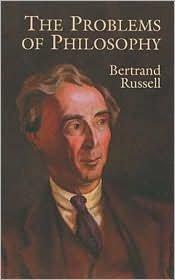
Σελίδες από το «Τα προβλήματα της φιλοσοφίας» που στέκονται μόνες τους, διαλεγμένες για το πώς διαβάζονται σήμερα. Το κείμενο ανήκει στο κοινό κτήμα.
Πώς θα ήταν να κοιτάζεις τον κόσμο χωρίς να θέλεις τίποτα.
Everything, in contemplation, that is personal or private, everything that depends upon habit, self-interest, or desire, distorts the object, and hence impairs the union which the intellect seeks. By thus making a barrier between subject and object, such personal and private things become a prison to the intellect. The free intellect will see as God might see, without a here and now, without hopes and fears, without the trammels of customary beliefs and traditional prejudices, calmly, dispassionately, in the sole and exclusive desire of knowledge—knowledge as impersonal, as purely contemplative, as it is possible for man to attain.
— Τα προβλήματα της φιλοσοφίας, Bertrand Russell (1912)
Το πιο σίγουρο πλάσμα του αγροκτήματος, το τελευταίο του πρωί.
A horse which has been often driven along a certain road resists the attempt to drive him in a different direction. Domestic animals expect food when they see the person who usually feeds them. We know that all these rather crude expectations of uniformity are liable to be misleading. The man who has fed the chicken every day throughout its life at last wrings its neck instead, showing that more refined views as to the uniformity of nature would have been useful to the chicken.
— Τα προβλήματα της φιλοσοφίας, Bertrand Russell (1912)
Πώς ένας μικρός ιδιωτικός κόσμος αμύνεται απέναντι σε έναν τεράστιο.
The life of the instinctive man is shut up within the circle of his private interests: family and friends may be included, but the outer world is not regarded except as it may help or hinder what comes within the circle of instinctive wishes. In such a life there is something feverish and confined, in comparison with which the philosophic life is calm and free. The private world of instinctive interests is a small one, set in the midst of a great and powerful world which must, sooner or later, lay our private world in ruins. Unless we can so enlarge our interests as to include the whole outer world, we remain like a garrison in a beleagured fortress, knowing that the enemy prevents escape and that ultimate surrender is inevitable.
— Τα προβλήματα της φιλοσοφίας, Bertrand Russell (1912)
Το τραπέζι της κουζίνας σου παύει να είναι απλό μόλις το κοιτάξεις καλά.
Thus our familiar table, which has roused but the slightest thoughts in us hitherto, has become a problem full of surprising possibilities. The one thing we know about it is that it is not what it seems. Beyond this modest result, so far, we have the most complete liberty of conjecture. Leibniz tells us it is a community of souls: Berkeley tells us it is an idea in the mind of God; sober science, scarcely less wonderful, tells us it is a vast collection of electric charges in violent motion.
— Τα προβλήματα της φιλοσοφίας, Bertrand Russell (1912)
Πεινάει μια γάτα όταν δεν τη βλέπει κανείς;
If the cat appears at one moment in one part of the room, and at another in another part, it is natural to suppose that it has moved from the one to the other, passing over a series of intermediate positions. But if it is merely a set of sense-data, it cannot have ever been in any place where I did not see it; thus we shall have to suppose that it did not exist at all while I was not looking, but suddenly sprang into being in a new place. If the cat exists whether I see it or not, we can understand from our own experience how it gets hungry between one meal and the next; but if it does not exist when I am not seeing it, it seems odd that appetite should grow during non-existence as fast as during existence.
— Τα προβλήματα της φιλοσοφίας, Bertrand Russell (1912)
Κάθε ματιά στον ήλιο είναι ήδη μια ματιά στο παρελθόν.
Considered as physical objects, the thunder and lightning are simultaneous; that is to say, the lightning is simultaneous with the disturbance of the air in the place where the disturbance begins, namely, where the lightning is. But the sense-datum which we call hearing the thunder does not take place until the disturbance of the air has travelled as far as to where we are. Similarly, it takes about eight minutes for the sun’s light to reach us; thus, when we see the sun we are seeing the sun of eight minutes ago.
— Τα προβλήματα της φιλοσοφίας, Bertrand Russell (1912)
Κάτι που όλοι γνωρίζουν, αλλά κανείς δεν μπορεί να εξηγήσει σε έναν τυφλό.
It is sometimes said that ‘light is a form of wave-motion’, but this is misleading, for the light which we immediately see, which we know directly by means of our senses, is not a form of wave-motion, but something quite different—something which we all know if we are not blind, though we cannot describe it so as to convey our knowledge to a man who is blind. A wave-motion, on the contrary, could quite well be described to a blind man, since he can acquire a knowledge of space by the sense of touch; and he can experience a wave-motion by a sea voyage almost as well as we can. But this, which a blind man can understand, is not what we mean by light: we mean by light just that which a blind man can never understand, and which we can never describe to him.
— Τα προβλήματα της φιλοσοφίας, Bertrand Russell (1912)
Μια μικρή λέξη που χρησιμοποιείς κάθε μέρα: πού βρίσκεται;
Suppose, for instance, that I am in my room. I exist, and my room exists; but does ‘in’ exist? Yet obviously the word ‘in’ has a meaning; it denotes a relation which holds between me and my room. This relation is something, although we cannot say that it exists in the same sense in which I and my room exist. The relation ‘in’ is something which we can think about and understand, for, if we could not understand it, we could not understand the sentence ‘I am in my room’.
— Τα προβλήματα της φιλοσοφίας, Bertrand Russell (1912)
Ένας καλός λόγος να μην απορρίπτεις κάτι μόνο και μόνο επειδή ακούγεται παράλογο.
Hence common sense leaves us completely in the dark as to the true intrinsic nature of physical objects, and if there were good reason to regard them as mental, we could not legitimately reject this opinion merely because it strikes us as strange. The truth about physical objects must be strange. It may be unattainable, but if any philosopher believes that he has attained it, the fact that what he offers as the truth is strange ought not to be made a ground of objection to his opinion.
— Τα προβλήματα της φιλοσοφίας, Bertrand Russell (1912)
Μια σύντομη, καθαρή περιήγηση στα ερωτήματα που βρίσκονται κάτω από τα πάντα: αν το τραπέζι υπάρχει στ’ αλήθεια, γιατί να ανατείλει ο ήλιος και αύριο και τι μπορούμε να γνωρίζουμε. Γραμμένο για αναγνώστες χωρίς φιλοσοφικό υπόβαθρο.
Διάβασε σελίδες από βιβλία σαν αυτό, μία τη φορά
Το BookFeed είναι μια ροή με αποσπάσματα από βιβλία. Μαθαίνει τι σου αρέσει και σε βοηθά να βρεις το επόμενο βιβλίο σου.