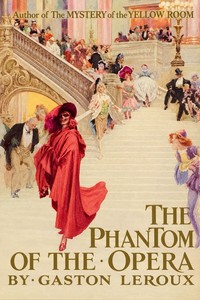
Το φάντασμα της όπερας
Gaston Leroux, 1910
Μια μασκοφορεμένη φιγούρα στοιχειώνει την Όπερα του Παρισιού και διδάσκει κρυφά μια νεαρή τραγουδίστρια. Ένα γοτθικό θρίλερ για την ιδιοφυΐα, την ασχήμια και το τίμημα της αγάπης.
 BookFeed English
Σελίδες από το «Το φάντασμα της όπερας» που στέκονται μόνες τους, διαλεγμένες για το πώς διαβάζονται σήμερα. Το κείμενο ανήκει στο κοινό κτήμα.
Το πιο τρομακτικό δωμάτιο της Όπερας είναι απολύτως συνηθισμένο.
After the deceptions and illusions of the torture-chamber, the precision of the details of that quiet little middle-class room seemed to have been invented for the express purpose of puzzling the mind of the mortal rash enough to stray into that abode of living nightmare. The wooden bedstead, the waxed mahogany chairs, the chest of drawers, those brasses, the little square antimacassars carefully placed on the backs of the chairs, the clock on the mantelpiece and the harmless-looking ebony caskets at either end, lastly, the whatnot filled with shells, with red pin-cushions, with mother-of-pearl boats and an enormous ostrich-egg, the whole discreetly lighted by a shaded lamp standing on a small round table: this collection of ugly, peaceable, reasonable furniture, AT THE BOTTOM OF THE OPERA CELLARS, bewildered the imagination more than all the late fantastic happenings. Αυτό που λέμε ιδιοφυΐα μπορεί να είναι κάτι που μας επισκέπτεται.
No one ever sees the Angel; but he is heard by those who are meant to hear him. He often comes when they least expect him, when they are sad and disheartened. Then their ears suddenly perceive celestial harmonies, a divine voice, which they remember all their lives. Persons who are visited by the Angel quiver with a thrill unknown to the rest of mankind. And they can not touch an instrument, or open their mouths to sing, without producing sounds that put all other human sounds to shame. Then people who do not know that the Angel has visited those persons say that they have genius. Πώς νιώθεις όταν απλώνεις το χέρι σου σε κάποιον μέσα από έναν καθρέφτη.
Christine walked toward her image in the glass and the image came toward her. The two Christines—the real one and the reflection—ended by touching; and Raoul put out his arms to clasp the two in one embrace. But, by a sort of dazzling miracle that sent him staggering, Raoul was suddenly flung back, while an icy blast swept over his face; he saw, not two, but four, eight, twenty Christines spinning round him, laughing at him and fleeing so swiftly that he could not touch one of them. At last, everything stood still again; and he saw himself in the glass. But Christine had disappeared. Πώς μια φήμη γίνεται βεβαιότητα και την τρέμει ένα ολόκληρο κτίριο.
And it was true. For several months, there had been nothing discussed at the Opera but this ghost in dress-clothes who stalked about the building, from top to bottom, like a shadow, who spoke to nobody, to whom nobody dared speak and who vanished as soon as he was seen, no one knowing how or where. As became a real ghost, he made no noise in walking. People began by laughing and making fun of this specter dressed like a man of fashion or an undertaker; but the ghost legend soon swelled to enormous proportions among the corps de ballet. All the girls pretended to have met this supernatural being more or less often. And those who laughed the loudest were not the most at ease. Αυτός που φοβάσαι πιο πολύ σου ζητά να κοιτάξεις αλλού όσο κλαίει.
Erik’s emotion was so great that he had to tell the Persian not to look at him, for he was choking and must take off his mask. The daroga went to the window and opened it. His heart was full of pity, but he took care to keep his eyes fixed on the trees in the Tuileries gardens, lest he should see the monster’s face. Η σκηνή μετά το ωράριο, όταν τα σκηνικά αρχίζουν να μοιάζουν με ανοιχτή θάλασσα.
They were almost alone in the huge, gloomy house; and a great silence surrounded them. It was the time when most of the stage-hands go out for a drink. The staff had left the boards for the moment, leaving a scene half set. A few rays of light, a wan, sinister light, that seemed to have been stolen from an expiring luminary, fell through some opening or other upon an old tower that raised its pasteboard battlements on the stage; everything, in this deceptive light, adopted a fantastic shape. In the orchestra stalls, the drugget covering them looked like an angry sea, whose glaucous waves had been suddenly rendered stationary by a secret order from the storm phantom, who, as everybody knows, is called Adamastor. MM. Moncharmin and Richard were the shipwrecked mariners amid this motionless turmoil of a calico sea. Το πιο σκληρό βασανιστήριο είναι ένας ήχος που ξέρεις πως είναι ψεύτικος.
Lastly—and this was the most pitiless torture of all—we heard the rain and it was not raining! This was an infernal invention... Oh, I knew well enough how Erik obtained it! He filled with little stones a very long and narrow box, broken up inside with wooden and metal projections. The stones, in falling, struck against these projections and rebounded from one to another; and the result was a series of pattering sounds that exactly imitated a rainstorm. Τα παραμύθια που λέει ένας πατέρας όταν ο ήλιος έχει βυθιστεί στη θάλασσα.
But their great treat was, in the twilight, in the great silence of the evening, after the sun had set in the sea, when Daae came and sat down by them on the roadside and, in a low voice, as though fearing lest he should frighten the ghosts whom he evoked, told them the legends of the land of the North. And, the moment he stopped, the children would ask for more. Gaston Leroux, 1910
Μια μασκοφορεμένη φιγούρα στοιχειώνει την Όπερα του Παρισιού και διδάσκει κρυφά μια νεαρή τραγουδίστρια. Ένα γοτθικό θρίλερ για την ιδιοφυΐα, την ασχήμια και το τίμημα της αγάπης.
Διάβασε σελίδες από βιβλία σαν αυτό, μία τη φορά
Το BookFeed είναι μια ροή με αποσπάσματα από βιβλία. Μαθαίνει τι σου αρέσει και σε βοηθά να βρεις το επόμενο βιβλίο σου.
Άνοιξε το BookFeedΔωρεάν, χωρίς εγγραφή.