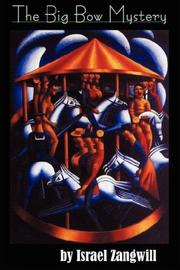
Σελίδες από το «Το μυστήριο της οδού Μπόου» που στέκονται μόνες τους, διαλεγμένες για το πώς διαβάζονται σήμερα. Το κείμενο ανήκει στο κοινό κτήμα.
Ο αφηγητής περιγράφει τον φόνο σαν προσεκτικά σχεδιασμένο πείραμα.
She cowered back, for an instant (I divined rather than saw the action) she shut off the dreaded sight with her hands. In that instant I had made my cut—precisely, scientifically—made so deep a cut and drew out the weapon so sharply that there was scarce a drop of blood on it; then there came from the throat a jet of blood which Mrs. Drabdump, conscious only of the horrid gash, saw but vaguely. I covered up the face quickly with a handkerchief to hide any convulsive distortion. But as the medical evidence (in this detail accurate) testified, death was instantaneous. I pocketed the razor and the empty sulfonal phial. With a woman like Mrs. Drabdump to watch me, I could do anything I pleased. I got her to draw my attention to the fact that both the windows were fastened.
— Το μυστήριο της οδού Μπόου, Israel Zangwill (1899)
Η φύση αντιγράφει τον Πόε ή απλώς κρύβει ένα παράλογο μυστήριο;
To the proverb, “You must not say Bo to a goose,” one added, “or else she will explain you the Mystery.” The name of the gentleman who asked whether the Bow Mystery was not ’arrowing shall not be divulged. There was more point in “Dagonet’s” remark that, if he had been one of the unhappy jurymen, he should have been driven to “suicide.” A professional paradox-monger pointed triumphantly to the somewhat similar situation in “the murder in the Rue Morgue,” and said that Nature had been plagiarizing again—like the monkey she was—and he recommended Poe’s publishers to apply for an injunction. More seriously, Poe’s solution was re-suggested by “Constant Reader” as an original idea. He thought that a small organ-grinder’s monkey might have got down the chimney with its master’s razor, and, after attempting to shave the occupant of the bed, have returned the way it came.
— Το μυστήριο της οδού Μπόου, Israel Zangwill (1899)
Πόσα θυμάσαι πραγματικά για κάποιον που γνώρισες;
“Not five. I say nothing of lapses of memory, of inborn defects of observational power—though the suspiciously precise recollection of dates and events possessed by ordinary witnesses in important trials taking place years after the occurrences involved, is one of the most amazing things in the curiosities of modern jurisprudence. I defy you, sir, to tell me what you had for dinner last Monday, or what exactly you were saying and doing at five o’clock last Tuesday afternoon. Nobody whose life does not run in mechanical grooves can do anything of the sort; unless, of course, the facts have been very impressive. But this by the way. The great obstacle to veracious observation is the element of prepossession in all vision. Has it ever struck you, sir, that we never see anyone more than once, if that?
— Το μυστήριο της οδού Μπόου, Israel Zangwill (1899)
Τι γίνεται όταν τα στοιχεία αλληλοαναιρούνται;
“Gentlemen, I am aware that this sounds impossible and contradictory. But it is the facts that contradict themselves. It seems clear that the deceased did not commit suicide. It seems equally clear that the deceased was not murdered. There is nothing for it, therefore, gentlemen, but to return a verdict tantamount to an acknowledgment of our incompetence to come to any adequately grounded conviction whatever as to the means or the manner by which the deceased met his death. It is the most inexplicable mystery in all my experience.” (Sensation.)
— Το μυστήριο της οδού Μπόου, Israel Zangwill (1899)
Ο Κρόουλ βάζει τα βιβλικά χωρία το ένα απέναντι στο άλλο.
It was a phrase that sabered the spiderwebs of logical refinement, and held them up scornfully on the point. When Crowl went for a little recreation in Victoria Park on Sunday afternoons, it was with this phrase that he invariably routed the supernaturalists. Crowl knew his Bible better than most ministers, and always carried a minutely-printed copy in his pocket, dogs-eared to mark contradictions in the text. The second chapter of Jeremiah says one thing; the first chapter of Corinthians says another. Two contradictory statements may both be true, but “I am only a plain man, and I want to know.” Crowl spent a large part of his time in setting “the word against the word.” Cockfighting affords its votaries no acuter pleasure than Crowl derived from setting two texts by the ears.
— Το μυστήριο της οδού Μπόου, Israel Zangwill (1899)
Μια ζωή χάνεται μέσα στην αχανή αδιαφορία του κόσμου.
A sudden consciousness of the futility of his existence pierced the little cobbler like an icy wind. He saw his own life, and a hundred million lives like his, swelling and breaking like bubbles on a dark ocean, unheeded, uncared for.
— Το μυστήριο της οδού Μπόου, Israel Zangwill (1899)
Η αίσθηση πνευματικής ανωτερότητας τον απομονώνει.
Denzil Cantercot stood smoking a cigarette in his landlord’s shop, and imparting an air of distinction and an agreeable aroma to the close leathery atmosphere. Crowl cobbled away, talking to his tenant without raising his eyes. He was a small, big-headed, sallow, sad-eyed man, with a greasy apron. Denzil was wearing a heavy overcoat with a fur collar. He was never seen without it in public during the winter. In private he removed it and sat in his shirt sleeves. Crowl was a thinker, or thought he was—which seems to involve original thinking anyway. His hair was thinning rapidly at the top, as if his brain was struggling to get as near as possible to the realities of things. He prided himself on having no fads. Few men are without some foible or hobby; Crowl felt almost lonely at times in his superiority.
— Το μυστήριο της οδού Μπόου, Israel Zangwill (1899)
Πώς μπαίνει κανείς σε ένα δωμάτιο κλειδωμένο από μέσα;
On the upper floor are two rooms—a front room used by deceased for a bedroom, and a back room which he used as a sitting-room. The back room has been left open, with the key inside, but the window is fastened. The door of the front room is not only locked, but bolted. We have seen the splintered mortise and the staple of the upper bolt violently forced from the woodwork and resting on the pin. The windows are bolted, the fasteners being firmly fixed in the catches. The chimney is too narrow to admit of the passage of even a child. This room, in fact, is as firmly barred in as if besieged. It has no communication with any other part of the house. It is as absolutely self-centered and isolated as if it were a fort in the sea or a log-hut in the forest.
— Το μυστήριο της οδού Μπόου, Israel Zangwill (1899)
Ένα τρυφερό γράμμα αποχαιρετισμού μέσα στην αγωνία του μυστηρίου.
“Dear Tom—This is to bid you farewell. It is the best for us all. I am going a long way, dearest. Do not seek to find me, for it will be useless. Think of me as one swallowed up by the waters, and be assured that it is only to spare you shame and humiliation in the future that I tear myself from you and all the sweetness of life. Darling, there is no other way. I feel you could never marry me now. I have felt it for months. Dear Tom, you will understand what I mean. We must look facts in the face. I hope you will always be friends with Mr. Constant. Good by, dear. God bless you!
— Το μυστήριο της οδού Μπόου, Israel Zangwill (1899)
Ένα σατιρικό αλλά οξυδερκές πρώτο έργο αστυνομικής λογοτεχνίας, που αμφισβητεί όσα θεωρούμε δεδομένα για τη λογική, την ευφυΐα και την αλήθεια. Μια παιχνιδιάρικη, εγκεφαλική βουτιά στα αγγλικά μυστήρια.
Διάβασε σελίδες από βιβλία σαν αυτό, μία τη φορά
Το BookFeed είναι μια ροή με αποσπάσματα από βιβλία. Μαθαίνει τι σου αρέσει και σε βοηθά να βρεις το επόμενο βιβλίο σου.