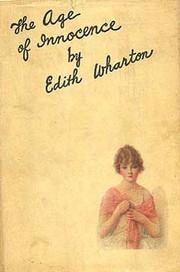
The Age of Innocence
Edith Wharton, 1920
 BookFeed English
Σελίδες από το «The Age of Innocence» που στέκονται μόνες τους, διαλεγμένες για το πώς διαβάζονται σήμερα. Το κείμενο ανήκει στο κοινό κτήμα.
Since then there had been no farther communication between them, and he had built up within himself a kind of sanctuary in which she throned among his secret thoughts and longings. Little by little it became the scene of his real life, of his only rational activities; thither he brought the books he read, the ideas and feelings which nourished him, his judgments and his visions. Outside it, in the scene of his actual life, he moved with a growing sense of unreality and insufficiency, blundering against familiar prejudices and traditional points of view as an absentminded man goes on bumping into the furniture of his own room. Absent—that was what he was: so absent from everything most densely real and near to those about him that it sometimes startled him to find they still imagined he was there. Archer felt irrationally angry. His host’s contemptuous tribute to May’s “niceness” was just what a husband should have wished to hear said of his wife. The fact that a coarseminded man found her lacking in attraction was simply another proof of her quality; yet the words sent a faint shiver through his heart. What if “niceness” carried to that supreme degree were only a negation, the curtain dropped before an emptiness? As he looked at May, returning flushed and calm from her final bull’s-eye, he had the feeling that he had never yet lifted that curtain. Now, as he reviewed his past, he saw into what a deep rut he had sunk. The worst of doing one’s duty was that it apparently unfitted one for doing anything else. At least that was the view that the men of his generation had taken. The trenchant divisions between right and wrong, honest and dishonest, respectable and the reverse, had left so little scope for the unforeseen. There are moments when a man’s imagination, so easily subdued to what it lives in, suddenly rises above its daily level, and surveys the long windings of destiny. Archer hung there and wondered. … As he dropped into his armchair near the fire his eyes rested on a large photograph of May Welland, which the young girl had given him in the first days of their romance, and which had now displaced all the other portraits on the table. With a new sense of awe he looked at the frank forehead, serious eyes and gay innocent mouth of the young creature whose soul’s custodian he was to be. That terrifying product of the social system he belonged to and believed in, the young girl who knew nothing and expected everything, looked back at him like a stranger through May Welland’s familiar features; and once more it was borne in on him that marriage was not the safe anchorage he had been taught to think, but a voyage on uncharted seas. It would presently be his task to take the bandage from this young woman’s eyes, and bid her look forth on the world. But how many generations of the women who had gone to her making had descended bandaged to the family vault? He shivered a little, remembering some of the new ideas in his scientific books, and the much-cited instance of the Kentucky cave-fish, which had ceased to develop eyes because they had no use for them. What if, when he had bidden May Welland to open hers, they could only look out blankly at blankness? She was so placed that Archer, by merely raising his eyes, could see her bent above her work-frame, her ruffled elbow-sleeves slipping back from her firm round arms, the betrothal sapphire shining on her left hand above her broad gold wedding-ring, and the right hand slowly and laboriously stabbing the canvas. As she sat thus, the lamplight full on her clear brow, he said to himself with a secret dismay that he would always know the thoughts behind it, that never, in all the years to come, would she surprise him by an unexpected mood, by a new idea, a weakness, a cruelty or an emotion. She had spent her poetry and romance on their short courting: the function was exhausted because the need was past. As he wrote a word on his card and waited for an envelope he glanced about the embowered shop, and his eye lit on a cluster of yellow roses. He had never seen any as sun-golden before, and his first impulse was to send them to May instead of the lilies. But they did not look like her—there was something too rich, too strong, in their fiery beauty. In a sudden revulsion of mood, and almost without knowing what he did, he signed to the florist to lay the roses in another long box, and slipped his card into a second envelope, on which he wrote the name of the Countess Olenska; then, just as he was turning away, he drew the card out again, and left the empty envelope on the box. Winsett was not a journalist by choice. He was a pure man of letters, untimely born in a world that had no need of letters; but after publishing one volume of brief and exquisite literary appreciations, of which one hundred and twenty copies were sold, thirty given away, and the balance eventually destroyed by the publishers (as per contract) to make room for more marketable material, he had abandoned his real calling, and taken a sub-editorial job on a women’s weekly, where fashion-plates and paper patterns alternated with New England love-stories and advertisements of temperance drinks. Edith Wharton, 1920
Διάβασε σελίδες από βιβλία σαν αυτό, μία τη φορά
Το BookFeed είναι μια ροή με αποσπάσματα από βιβλία. Μαθαίνει τι σου αρέσει και σε βοηθά να βρεις το επόμενο βιβλίο σου.
Άνοιξε το BookFeedΔωρεάν, χωρίς εγγραφή.