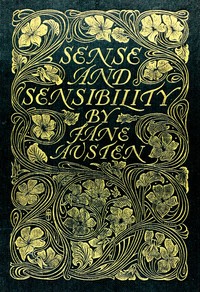
Λογική και ευαισθησία
Jane Austen, 1811
Δύο αδελφές, η μία που νιώθει τα πάντα κι η άλλη που δεν δείχνει τίποτα, ανακαλύπτουν τι κοστίζει και τι κρύβει κάθε μορφή αυτοσυγκράτησης.
 BookFeed English
Σελίδες από το «Λογική και ευαισθησία» που στέκονται μόνες τους, διαλεγμένες για το πώς διαβάζονται σήμερα. Το κείμενο ανήκει στο κοινό κτήμα.
Η Μαριάν θεωρεί πως μια ήρεμη καρδιά δεν αξίζει έπαινο επειδή μένει ήρεμη.
Such behaviour as this, so exactly the reverse of her own, appeared no more meritorious to Marianne, than her own had seemed faulty to her. The business of self-command she settled very easily:—with strong affections it was impossible, with calm ones it could have no merit. That her sister’s affections were calm, she dared not deny, though she blushed to acknowledge it; and of the strength of her own, she gave a very striking proof, by still loving and respecting that sister, in spite of this mortifying conviction. Τα τραγούδια που διαλέγουμε όταν θέλουμε να κάνουμε τη λύπη πιο βαριά.
The evening passed off in the equal indulgence of feeling. She played over every favourite song that she had been used to play to Willoughby, every air in which their voices had been oftenest joined, and sat at the instrument gazing on every line of music that he had written out for her, till her heart was so heavy that no farther sadness could be gained; and this nourishment of grief was every day applied. She spent whole hours at the pianoforte alternately singing and crying; her voice often totally suspended by her tears. In books too, as well as in music, she courted the misery which a contrast between the past and present was certain of giving. She read nothing but what they had been used to read together. Μια γυναίκα έχει ήδη πάρει το ύφος κάποιου που σε αντιπαθεί με την πρώτη ματιά.
Mrs. Ferrars was a little, thin woman, upright, even to formality, in her figure, and serious, even to sourness, in her aspect. Her complexion was sallow; and her features small, without beauty, and naturally without expression; but a lucky contraction of the brow had rescued her countenance from the disgrace of insipidity, by giving it the strong characters of pride and ill nature. She was not a woman of many words; for, unlike people in general, she proportioned them to the number of her ideas; and of the few syllables that did escape her, not one fell to the share of Miss Dashwood, whom she eyed with the spirited determination of disliking her at all events. Όσο πιο γρήγορα έρχεται η παρηγοριά, τόσο περισσότερο κρατάει το κλάμα.
But unfortunately in bestowing these embraces, a pin in her ladyship’s head dress slightly scratching the child’s neck, produced from this pattern of gentleness such violent screams, as could hardly be outdone by any creature professedly noisy. The mother’s consternation was excessive; but it could not surpass the alarm of the Miss Steeles, and everything was done by all three, in so critical an emergency, which affection could suggest as likely to assuage the agonies of the little sufferer. She was seated in her mother’s lap, covered with kisses, her wound bathed with lavender-water, by one of the Miss Steeles, who was on her knees to attend her, and her mouth stuffed with sugar plums by the other. With such a reward for her tears, the child was too wise to cease crying. Ένας άντρας ξοδεύει μια ώρα για μια θήκη οδοντογλυφίδων, με κοινό τις αδελφές Ντάσγουντ.
At last the affair was decided. The ivory, the gold, and the pearls, all received their appointment, and the gentleman having named the last day on which his existence could be continued without the possession of the toothpick-case, drew on his gloves with leisurely care, and bestowing another glance on the Miss Dashwoods, but such a one as seemed rather to demand than express admiration, walked off with a happy air of real conceit and affected indifference. Δυο άνθρωποι είναι τόσο φανερά ερωτευμένοι που ούτε το κορόιδεμα τους αγγίζει.
When he was present she had no eyes for anyone else. Everything he did, was right. Everything he said, was clever. If their evenings at the park were concluded with cards, he cheated himself and all the rest of the party to get her a good hand. If dancing formed the amusement of the night, they were partners for half the time; and when obliged to separate for a couple of dances, were careful to stand together and scarcely spoke a word to anybody else. Such conduct made them of course most exceedingly laughed at; but ridicule could not shame, and seemed hardly to provoke them. Η ανακούφιση να είσαι με κάποιον που δεν νοιάζεται πώς είσαι.
The calm and polite unconcern of Lady Middleton on the occasion was a happy relief to Elinor’s spirits, oppressed as they often were by the clamorous kindness of the others. It was a great comfort to her to be sure of exciting no interest in one person at least among their circle of friends: a great comfort to know that there was one who would meet her without feeling any curiosity after particulars, or any anxiety for her sister’s health. Κάθε ερασιτέχνης μουσικός είναι ο καλύτερος στην Αγγλία, τουλάχιστον για δύο ανθρώπους.
The events of this evening were not very remarkable. The party, like other musical parties, comprehended a great many people who had real taste for the performance, and a great many more who had none at all; and the performers themselves were, as usual, in their own estimation, and that of their immediate friends, the first private performers in England. Jane Austen, 1811
Δύο αδελφές, η μία που νιώθει τα πάντα κι η άλλη που δεν δείχνει τίποτα, ανακαλύπτουν τι κοστίζει και τι κρύβει κάθε μορφή αυτοσυγκράτησης.
Διάβασε σελίδες από βιβλία σαν αυτό, μία τη φορά
Το BookFeed είναι μια ροή με αποσπάσματα από βιβλία. Μαθαίνει τι σου αρέσει και σε βοηθά να βρεις το επόμενο βιβλίο σου.
Άνοιξε το BookFeedΔωρεάν, χωρίς εγγραφή.