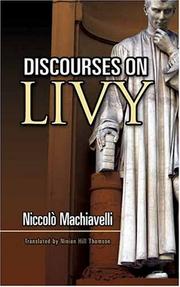
Στοχασμοί πάνω στον Τίτο Λίβιο
Niccolò Machiavelli, 1531
Ο Μακιαβέλι διαβάζει την ιστορία της Ρώμης και αναρωτιέται πώς οι δημοκρατίες επικρατούν, διαφθείρονται και πέφτουν — και γιατί οι ίδιες επιθυμίες επιστρέφουν σε κάθε πόλη.
 BookFeed English
Σελίδες από το «Στοχασμοί πάνω στον Τίτο Λίβιο» που στέκονται μόνες τους, διαλεγμένες για το πώς διαβάζονται σήμερα. Το κείμενο ανήκει στο κοινό κτήμα.
Το δυσκολότερο είναι να αλλάξεις μέθοδο αφού πρώτα πετύχεις.
As to why such changes are impossible, two reasons may be given. One is that we cannot act in opposition to the bent of our nature. The other, that when a man has been very successful while following a particular method, he can never be convinced that it is for his advantage to try some other. And hence it results that a man’s fortunes vary, because times change and he does not change with them. So, too, with commonwealths, which, as we have already shown at length, are ruined from not altering their institutions to suit the times. And commonwealths are slower to change than princes are, changes costing them more effort; because occasions must be waited for which shall stir the whole community, and it is not enough that a single citizen alters his method of acting. Η ελευθερία δυσκολεύει όσους δεν έχουν μάθει να τη χρησιμοποιούν.
Should a people accustomed to live under a prince by any accident become free, as did the Romans on the expulsion of the Tarquins, we know from numberless instances recorded in ancient history, how hard it will be for it to maintain that freedom. And this is no more than we might expect. For a people in such circumstances may be likened to the wild animal which, though destined by nature to roam at large in the woods, has been reared in the cage and in constant confinement and which, should it chance to be set free in the open country, being unused to find its own food, and unfamiliar with the coverts where it might lie concealed, falls a prey to the first who seeks to recapture it. Τι μένει ίδιο μέσα σου όταν χάνεις τη θέση σου;
Among other high sayings which our historian ascribes to Camillus, as showing of what stuff a truly great man should be made, he puts in his mouth the words, “My courage came not with my dictatorship nor went with my exile;” for by these words we are taught that a great man is constantly the same through all vicissitudes of Fortune; so that although she change, now exalting, now depressing, he remains unchanged, and retains always a mind so unmoved, and in such complete accordance with his nature as declares to all that over him Fortune has no dominion. Γιατί μια ριζική αλλαγή συχνά μοιάζει σαν να μην άλλαξε τίποτα.
Whoever takes upon him to reform the government of a city, must, if his measures are to be well received and carried out with general approval, preserve at least the semblance of existing methods, so as not to appear to the people to have made any change in the old order of things; although, in truth, the new ordinances differ altogether from those which they replace. For when this is attended to, the mass of mankind accept what seems as what is; nay, are often touched more nearly by appearances than by realities. Γιατί τίποτα απ’ όσα αποκτάμε δεν μας αρκεί;
But, further, since the desires of men are insatiable, Nature prompting them to desire all things and Fortune permitting them to enjoy but few, there results a constant discontent in their minds, and a loathing of what they possess, prompting them to find fault with the present, praise the past, and long for the future, even though they be not moved thereto by any reasonable cause. Μια δημοκρατία πρέπει να χτιστεί έχοντας κατά νου τη χειρότερη πλευρά μας.
They who lay the foundations of a state and furnish it with laws must, as is shown by all who have treated of civil government, and by examples of which history is full, assume that all men are bad, and will always, when they have free field, give loose to their evil inclinations; and that if these for a while remain hidden, it is owing to some secret cause, which, from our having no contrary experience, we do not recognize at once, but which is afterwards revealed by Time, of whom we speak as the father of all truth. Η ιστορία επαναλαμβάνεται, γιατί οι ανθρώπινες επιθυμίες δεν αλλάζουν.
Anyone comparing the present with the past will soon perceive that in all cities and in all nations there prevail the same desires and passions as always have prevailed; for which reason it should be an easy matter for him who carefully examines past events, to foresee those which are about to happen in any republic, and to apply such remedies as the ancients have used in like cases; or finding none which have been used by them, to strike out new ones, such as they might have used in similar circumstances. But these lessons being neglected or not understood by readers, or, if understood by them, being unknown to rulers, it follows that the same disorders are common to all times. Ένα γεμάτο ταμείο δεν είναι το ίδιο με έναν στρατό.
Since any man may begin a war at his pleasure, but cannot at his pleasure bring it to a close, a prince before he engages in any warlike enterprise ought to measure his strength and govern himself accordingly. But he must be prudent enough not to deceive himself as to his strength, which he will always do, if he measure it by money, by advantage of position, or by the goodwill of his subjects, while he is unprovided with an army of his own. These are things which may swell your strength but do not constitute it, being in themselves null and of no avail without an army on which you can depend. Ένα κράτος χρειάζεται νόμιμη διέξοδο για τις επικίνδυνες εντάσεις.
A law of this kind has two effects most beneficial to a state: first, that the citizens from fear of being accused, do not engage in attempts hurtful to the state, or doing so, are put down at once and without respect of persons: and next, that a vent is given for the escape of all those evil humours which, from whatever cause, gather in cities against particular citizens; for unless an outlet be duly provided for these by the laws, they flow into irregular channels and overwhelm the state. There is nothing, therefore, which contributes so much to the stability and permanence of a state, as to take care that the fermentation of these disturbing humours be supplied by operation of law with a recognized outlet. Γιατί η Ιταλία έμεινε μοιρασμένη και ποιος φταίει;
The Church, therefore, never being powerful enough herself to take possession of the entire country, while, at the same time, preventing anyone else from doing so, has made it impossible to bring Italy under one head; and has been the cause of her always living subject to many princes or rulers, by whom she has been brought to such division and weakness as to have become a prey, not to Barbarian kings only, but to any who have thought fit to attack her. For this, I say, we Italians have none to thank but the Church. Niccolò Machiavelli, 1531
Ο Μακιαβέλι διαβάζει την ιστορία της Ρώμης και αναρωτιέται πώς οι δημοκρατίες επικρατούν, διαφθείρονται και πέφτουν — και γιατί οι ίδιες επιθυμίες επιστρέφουν σε κάθε πόλη.
Διάβασε σελίδες από βιβλία σαν αυτό, μία τη φορά
Το BookFeed είναι μια ροή με αποσπάσματα από βιβλία. Μαθαίνει τι σου αρέσει και σε βοηθά να βρεις το επόμενο βιβλίο σου.
Άνοιξε το BookFeedΔωρεάν, χωρίς εγγραφή.