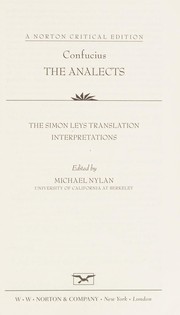
Ανάλεκτα
Confucius
Μια συλλογή από σύντομες, κοφτές συζητήσεις για το πώς ζούμε με τους άλλους, που μένουν στη μνήμη κυρίως επειδή δεν χωρούν σε απλούς κανόνες.
 BookFeed English
Σελίδες από το «Ανάλεκτα» που στέκονται μόνες τους, διαλεγμένες για το πώς διαβάζονται σήμερα. Το κείμενο ανήκει στο κοινό κτήμα.
Μια φιλοδοξία που μοιάζει με εκδρομή, κι ένας δάσκαλος που την προτιμά.
Last of all, the Master asked Tsǎng Hsî, “Tien, what are your wishes?” Tien, pausing as he was playing on his lute, while it was yet twanging, laid the instrument aside, and rose. “My wishes,” he said, “are different from the cherished purposes of these three gentlemen.” “What harm is there in that?” said the Master; “do you also, as well as they, speak out your wishes.” Tien then said, “In this, the last month of spring, with the dress of the season all complete, along with five or six young men who have assumed the cap, and six or seven boys, I would wash in the Î, enjoy the breeze among the rain altars, and return home singing.” The Master heaved a sigh and said, “I give my approval to Tien.” Όσο το πλησιάζεις, τόσο απομακρύνεται.
Yen Yüan, in admiration of the Master’s doctrines, sighed and said, “I looked up to them, and they seemed to become more high; I tried to penetrate them, and they seemed to become more firm; I looked at them before me, and suddenly they seemed to be behind. Χίλια άρματα, μα καμία αρετή δεν έμεινε στη μνήμη.
The duke Ching of Ch’î had a thousand teams, each of four horses, but on the day of his death, the people did not praise him for a single virtue. Po-î and Shû-ch’î died of hunger at the foot of the Shau-yang mountain, and the people, down to the present time, praise them. Η ίδια ερώτηση, δύο αντίθετες απαντήσεις, και οι δύο σωστές.
Tsze-lû asked whether he should immediately carry into practice what he heard. The Master said, “There are your father and elder brothers to be consulted;—why should you act on that principle of immediately carrying into practice what you hear?” Zǎn Yû asked the same, whether he should immediately carry into practice what he heard, and the Master answered, “Immediately carry into practice what you hear.” Kung-hsî Hwâ said, “Yû asked whether he should carry immediately into practice what he heard, and you said, ‘There are your father and elder brothers to be consulted.’ Ch’iû asked whether he should immediately carry into practice what he heard, and you said, ‘Carry it immediately into practice.’ I, Ch’ih, am perplexed, and venture to ask you for an explanation.” The Master said, “Ch’iû is retiring and slow; therefore, I urged him forward. Δύο απόψεις για τη φιλία: η μία διαλέγει, η άλλη χωράει τους πάντες.
The disciples of Tsze-hsiâ asked Tsze-chang about the principles that should characterize mutual intercourse. Tsze-chang asked, “What does Tsze-hsiâ say on the subject?” They replied, “Tsze-hsiâ says:—‘Associate with those who can advantage you. Put away from you those who cannot do so.’ ” Tsze-chang observed, “This is different from what I have learned. The superior man honours the talented and virtuous, and bears with all. He praises the good, and pities the incompetent. Am I possessed of great talents and virtue?—who is there among men whom I will not bear with? Am I devoid of talents and virtue?—men will put me away from them. What have we to do with the putting away of others?” Πώς ξεχωρίζεις έναν καλό εργοδότη από έναν κακό, σε δύο προτάσεις.
The Master said, “The superior man is easy to serve and difficult to please. If you try to please him in any way which is not accordant with right, he will not be pleased. But in his employment of men, he uses them according to their capacity. The mean man is difficult to serve, and easy to please. If you try to please him, though it be in a way which is not accordant with right, he may be pleased. But in his employment of men, he wishes them to be equal to everything.” Είναι πολύ άρρωστος για να σε δει, αλλά όχι για να τραγουδήσει.
Zû Pei wished to see Confucius, but Confucius declined, on the ground of being sick, to see him. When the bearer of this message went out at the door, (the Master) took his lute and sang to it, in order that Pei might hear him. Ένας ηγεμόνας ρωτά πώς θα σταματήσει τις κλοπές. Ο Κομφούκιος στρέφεται προς εκείνον.
Chî K’ang, distressed about the number of thieves in the state, inquired of Confucius how to do away with them. Confucius said, “If you, sir, were not covetous, although you should reward them to do it, they would not steal.” Confucius
Μια συλλογή από σύντομες, κοφτές συζητήσεις για το πώς ζούμε με τους άλλους, που μένουν στη μνήμη κυρίως επειδή δεν χωρούν σε απλούς κανόνες.
Διάβασε σελίδες από βιβλία σαν αυτό, μία τη φορά
Το BookFeed είναι μια ροή με αποσπάσματα από βιβλία. Μαθαίνει τι σου αρέσει και σε βοηθά να βρεις το επόμενο βιβλίο σου.
Άνοιξε το BookFeedΔωρεάν, χωρίς εγγραφή.